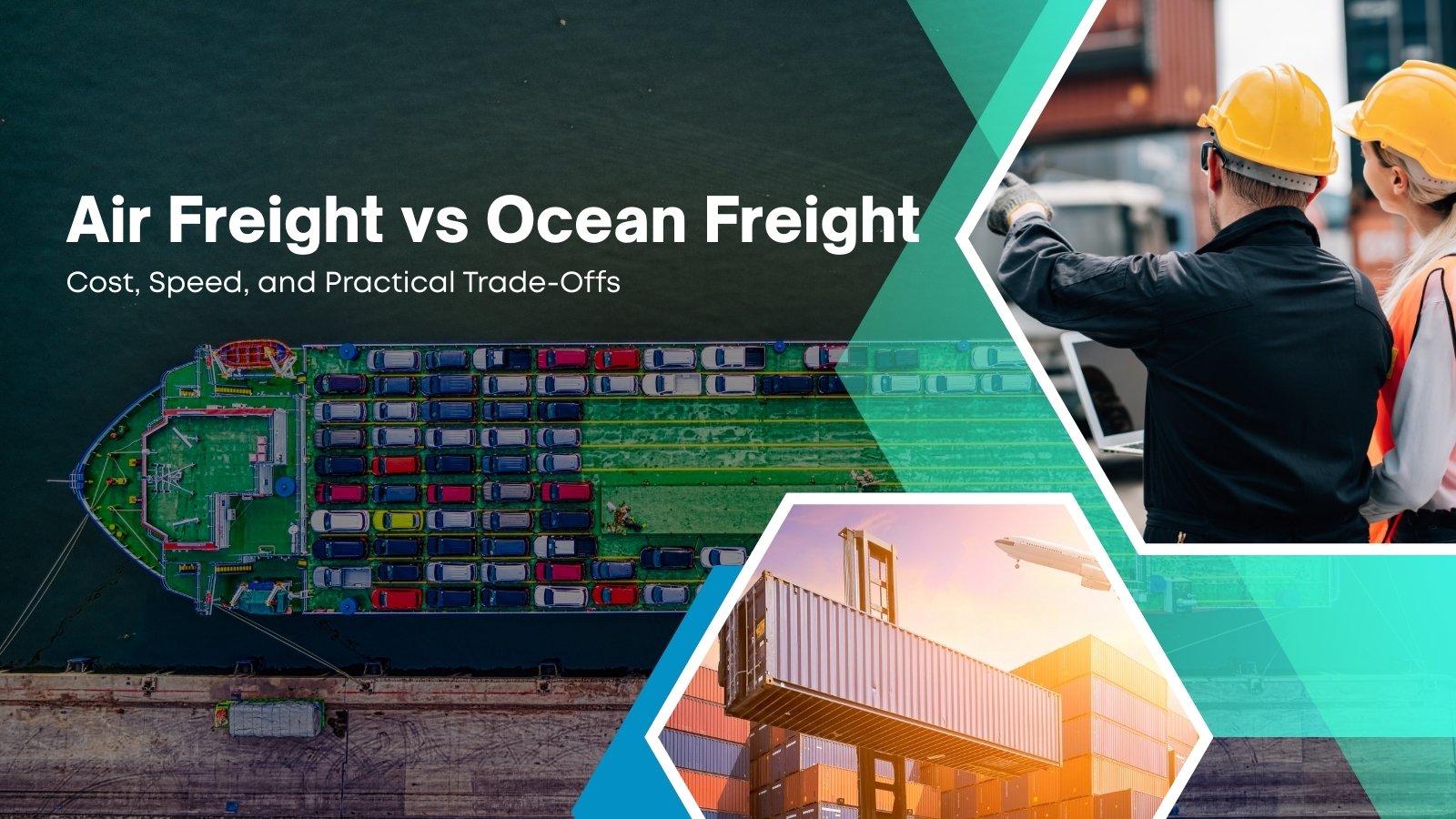
Air freight and ocean freight are the two primary modes for international shipping. Each serves a different operational purpose, and choosing between them depends on urgency, shipment size, cost tolerance, and overall supply chain strategy. Understanding the practical differences helps businesses make informed decisions rather than defaulting to speed or cost alone.
Speed is the most obvious difference. Air freight moves significantly faster than ocean freight. International air shipments can arrive within days, while ocean freight typically takes several weeks depending on origin and destination ports. For time-sensitive goods such as electronics, medical supplies, or urgent spare parts, air freight often prevents operational disruptions. However, total transit time also includes customs clearance, terminal handling, and final delivery, not just flight duration.
Cost is another major factor. Air freight is usually more expensive per kilogram compared to ocean freight. Pricing is influenced by chargeable weight, dimensional weight, fuel surcharges, and route demand. Ocean freight, particularly full container load (FCL), offers lower cost per unit for larger shipments. Businesses moving bulk cargo or non-urgent inventory typically rely on ocean transport to maintain cost efficiency.
Shipment size and weight influence the decision significantly. Large, heavy shipments often justify ocean freight due to lower cost per volume. Smaller, lightweight, high-value shipments may justify air freight despite higher rates. In some cases, businesses use air freight temporarily to recover from delays before returning to ocean shipping for regular cycles.
Reliability considerations also play a role. Air freight schedules are frequent and predictable, but weather disruptions and airport congestion can still occur. Ocean freight depends on vessel schedules and port operations. Port congestion, container shortages, and customs inspections can affect transit times.
Inventory strategy often determines mode selection. Businesses operating with low inventory buffers may rely on air freight to replenish stock quickly. Companies with longer planning horizons may use ocean freight to reduce transportation expenses and maintain stable supply chains.
Risk tolerance is another element. Air freight involves fewer handling days compared to ocean freight, which may reduce exposure to environmental conditions. However, ocean freight remains reliable for properly packaged cargo when planning accounts for transit duration.
Many businesses adopt a hybrid approach. Routine shipments may move by ocean, while urgent or high-priority goods ship by air. This multimodal strategy balances cost control with service continuity.
Ultimately, neither mode is universally better. The right choice depends on balancing cost, urgency, shipment size, and business objectives. Companies that evaluate these variables carefully can align transportation decisions with operational needs.
Frequently Asked Questions
Which is cheaper: air freight or ocean freight?
Ocean freight is generally more cost-effective for large shipments, while air freight costs more per kilogram.
Is air freight always faster?
Yes in transit time, but customs and delivery coordination affect total arrival time.
When should a company switch from ocean to air freight?
When urgency outweighs cost considerations, such as avoiding production delays or stockouts.
Can businesses use both modes?
Yes. Many companies combine air and ocean shipping based on shipment cycles and urgency.
Does ocean freight have higher risk of delay?
Ocean freight transit is longer and may be affected by port congestion, but proper planning reduces disruption.