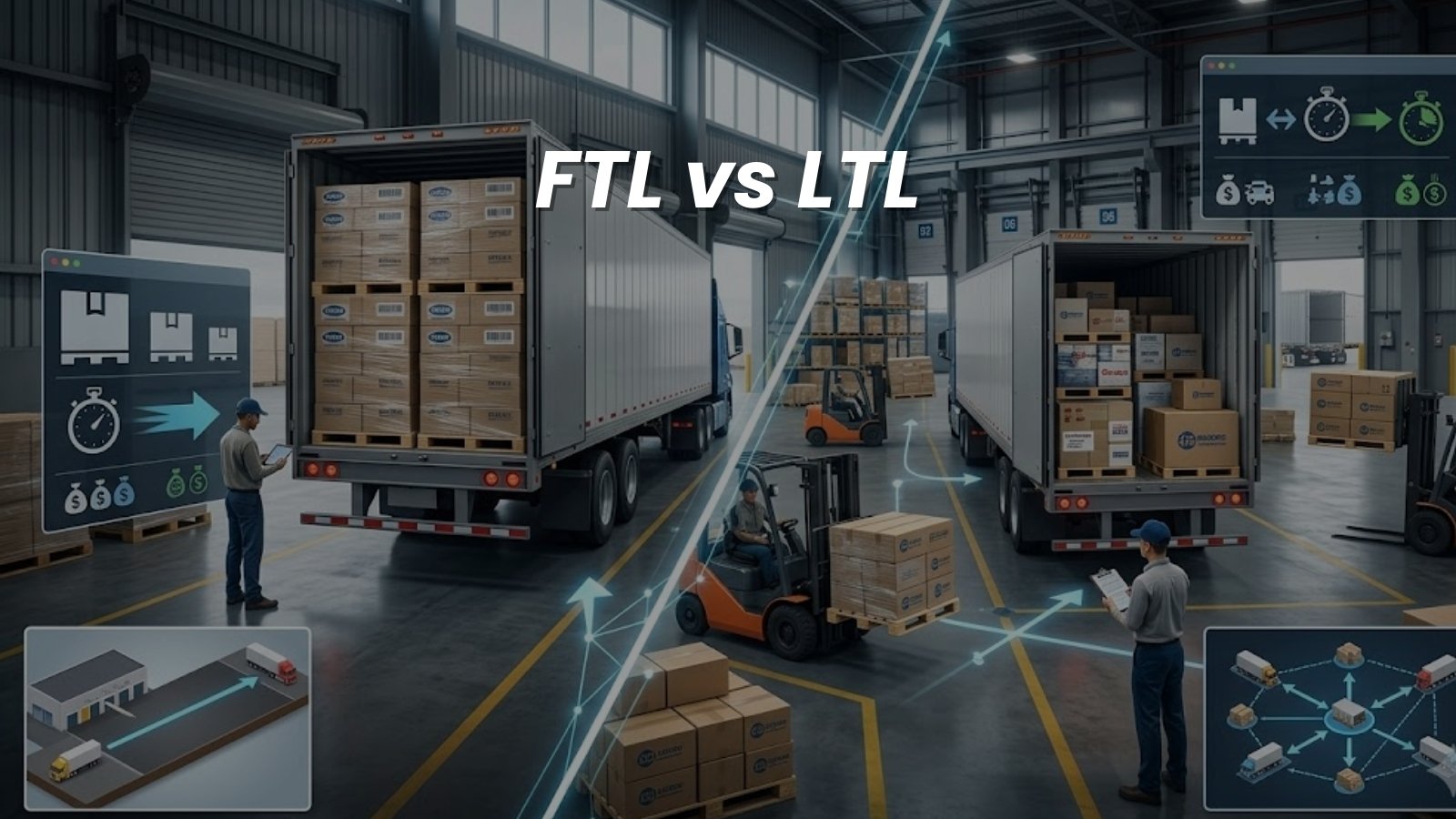
Choosing between Full Truckload (FTL) and Less Than Truckload (LTL) freight depends primarily on shipment size, delivery urgency, and handling sensitivity. While both move goods by road, their structure and operational flow differ significantly.
FTL involves reserving an entire trailer for one shipment. The cargo moves directly from pickup to delivery without passing through intermediate terminals. This reduces handling and often results in faster, more predictable transit times. FTL is typically used when shipment volume is large enough to fill most of a trailer or when goods are fragile, high-value, or time-sensitive.
LTL, by contrast, consolidates shipments from multiple shippers into a shared trailer. Freight moves through a terminal network where it is sorted and reloaded before final delivery. This structure makes LTL more cost-effective for smaller shipments but can introduce additional transit time due to transfers.
Shipment size is the first deciding factor. If cargo occupies more than half of a trailer, FTL may offer better overall value and reduced handling risk. Smaller shipments that do not justify a full trailer generally benefit from LTL’s shared-cost model.
Timing requirements are equally important. When delivery deadlines are strict or when production schedules depend on precise arrival, FTL often provides more control. LTL works well when there is flexibility in delivery windows.
Cost comparison should also include accessorial charges. LTL shipments may involve liftgate services, residential delivery fees, or reclassification costs if dimensions are incorrect. FTL pricing is usually more straightforward, based on distance, equipment type, and market conditions.
Risk tolerance matters too. Because LTL shipments move through multiple terminals, they experience additional handling. Proper packaging mitigates risk, but businesses shipping sensitive goods may prefer FTL to minimize touchpoints.
Ultimately, the decision is not about which option is better overall, but which aligns with shipment volume, delivery schedule, and cost expectations. Many businesses use both models depending on operational needs.
Frequently Asked Questions
Is FTL always faster than LTL?
Often yes, because it moves directly without terminal transfers.
When is LTL more economical?
When shipment volume is small and does not require a full trailer.
Does FTL reduce damage risk?
Yes, because cargo remains in one trailer throughout transit.
Can businesses switch between FTL and LTL?
Yes. Many companies evaluate each shipment individually.
What is the main deciding factor?
Shipment size and delivery urgency are the primary considerations.