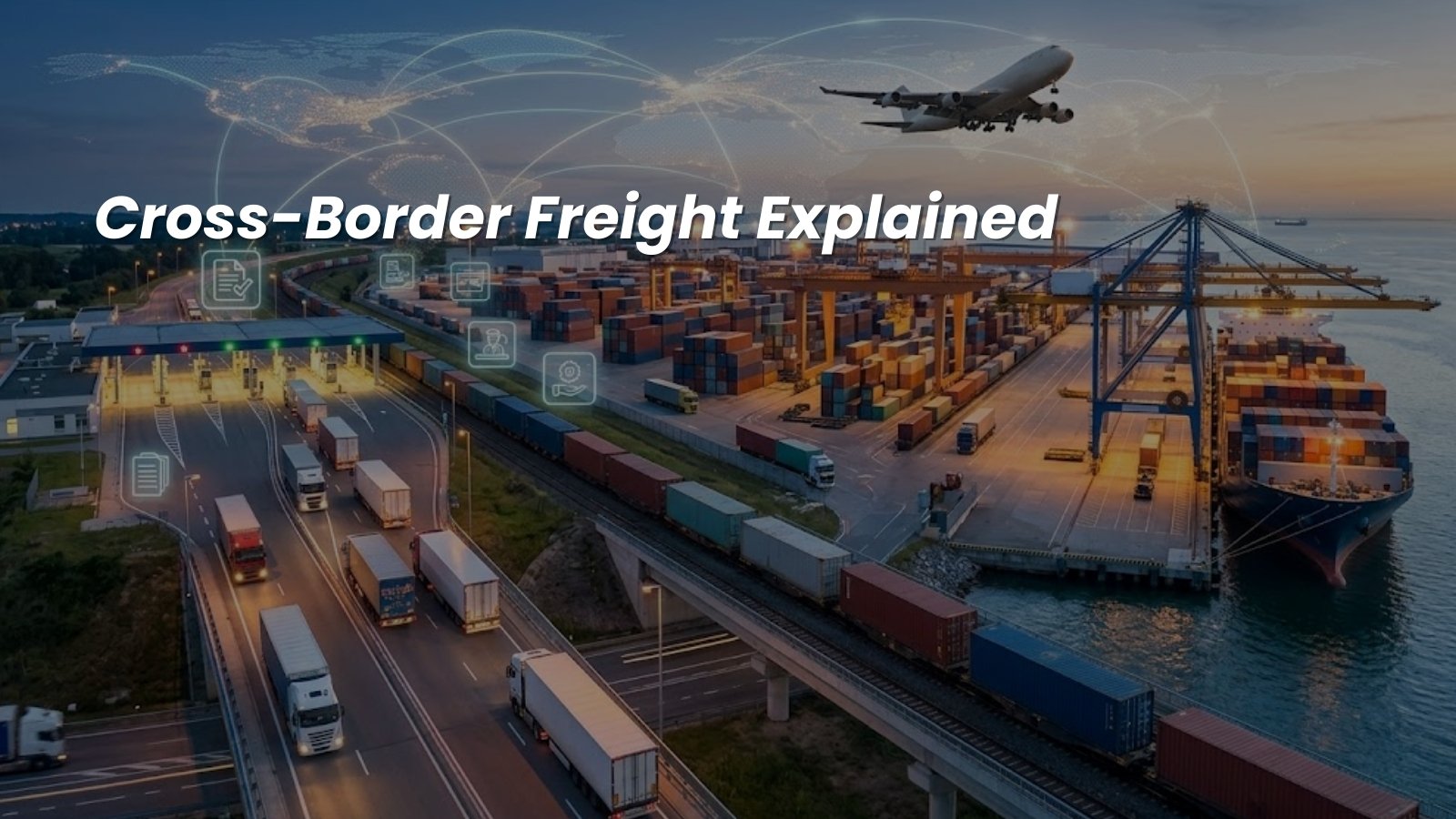
Cross-border freight involves moving goods from one country to another using road transport or a combination of road, rail, ocean, and air. While the concept sounds straightforward, the operational reality includes regulatory checks, customs procedures, documentation coordination, and timing considerations that differ significantly from domestic shipping.
At its core, cross-border freight connects suppliers, manufacturers, distributors, and retailers across national boundaries. Businesses rely on it to maintain regional supply chains, access global markets, and manage cost-effective sourcing strategies. However, unlike domestic freight, international movement introduces compliance requirements that must be handled carefully to prevent delays.
The Cross-Border Freight Process: Step by Step
Every cross-border shipment begins with proper documentation. Before cargo is even loaded, commercial invoices, packing lists, and classification details must be prepared. These documents describe the goods, declare value, and provide regulatory authorities with the information needed for customs clearance.
Once documentation is prepared, cargo is loaded at origin. In road-based cross-border freight, this typically involves a dedicated truck or shared trailer depending on shipment size. The shipment then travels toward the border crossing point or port of exit.
At the border, customs authorities review documentation. Duties, taxes, and regulatory requirements are assessed. Depending on the commodity type, inspections may be conducted. Once clearance is granted, the shipment proceeds into the destination country and continues to final delivery.
In multimodal cross-border transport, freight may combine truck transport with rail or ocean shipping before reaching the border. Coordination between carriers becomes critical in these cases, as timing mismatches can create unnecessary dwell time.
Key Documentation Required for Cross-Border Freight
Accurate documentation is the foundation of smooth border movement. Core documents typically include:
• Commercial invoice with clear product descriptions and declared values
• Packing list detailing weight, dimensions, and packaging type
• Bill of lading or freight contract
• Certificates of origin when applicable
• Import/export permits for regulated goods
Incorrect or incomplete documentation is one of the most common causes of border delays. Even minor discrepancies in product descriptions or declared value can trigger additional review.
Customs and Regulatory Considerations
Customs clearance is the defining factor in cross-border freight. Authorities evaluate compliance with trade agreements, tariff classifications, and local regulations. Products such as food, pharmaceuticals, electronics, chemicals, and automotive components often require additional documentation or certifications.
Tariff codes (commonly referred to as HS codes) determine applicable duties and taxes. Misclassification can lead to reassessment, fines, or cargo holds. Businesses moving goods across borders regularly should maintain accurate classification records to avoid repeated corrections.
Inspections may occur randomly or based on risk assessment. While not all shipments are inspected, businesses should plan for the possibility of additional processing time.
Common Causes of Cross-Border Delays
Border delays can result from several operational and regulatory factors. The most frequent causes include documentation inconsistencies, unpaid duties, incomplete permits, and volume congestion at high-traffic crossings.
Seasonal trade surges also influence clearance speed. Peak retail seasons and agricultural export cycles increase border traffic, extending processing times. Weather events and infrastructure constraints at border checkpoints may further impact transit schedules.
Additionally, differences in regulatory interpretation between countries can slow clearance if documentation standards vary.
How Multimodal Transport Supports Cross-Border Freight
In some corridors, combining transport modes improves efficiency. For example, cargo may move by truck to a rail terminal, cross the border by rail, and then continue by truck to its final destination. This reduces highway congestion and may lower transportation costs over long distances.
However, multimodal transport requires tighter coordination. Each transfer point introduces timing risk. Clear communication between carriers and customs brokers ensures cargo does not sit idle during mode transitions.
When Cross-Border Freight Makes Strategic Sense
Cross-border freight supports businesses operating in regional trade networks. Manufacturers often source raw materials from neighboring countries to control costs. Retailers may import finished goods from cross-border distribution hubs to shorten supply lines.
Trade agreements between countries can also make cross-border movement economically attractive by reducing tariffs. However, compliance requirements remain in place regardless of trade incentives.
Risk Management in Cross-Border Shipping
Managing risk begins with preparation. Accurate documentation, early booking, and confirmation of import regulations reduce preventable delays. Working with experienced customs brokers or freight coordinators improves compliance accuracy.
Cargo insurance may be considered for high-value shipments, particularly when crossing multiple jurisdictions. Maintaining communication between shipper, carrier, and consignee ensures transparency throughout transit.
Transit Time Expectations
Transit time for cross-border freight depends on distance, border congestion, inspection frequency, and documentation accuracy. While road transport across neighboring countries may take only a few days, clearance procedures can extend delivery if issues arise.
Businesses should build reasonable buffer time into delivery schedules, especially for first-time shipments or new trade lanes.
Technology and Visibility
Tracking systems provide shipment updates throughout transit, but visibility often depends on integration between carriers and customs platforms. Digital documentation submission in some regions accelerates clearance by allowing pre-arrival processing.
Although technology improves coordination, regulatory compliance remains the most critical factor in cross-border success.
Frequently Asked Questions
What is cross-border freight?
It is the movement of goods between two countries using road or multimodal transportation.
How long does cross-border shipping take?
Transit time varies based on distance, border traffic, and customs clearance requirements.
What causes most border delays?
Documentation errors, unpaid duties, and inspection requirements are common causes.
Is customs clearance mandatory for all cross-border shipments?
Yes. Every international shipment must meet regulatory requirements.
Does multimodal transport improve efficiency?
It can reduce cost and congestion but requires precise coordination.
How can businesses reduce cross-border risk?
Accurate documentation, early planning, and compliance review improve reliability.