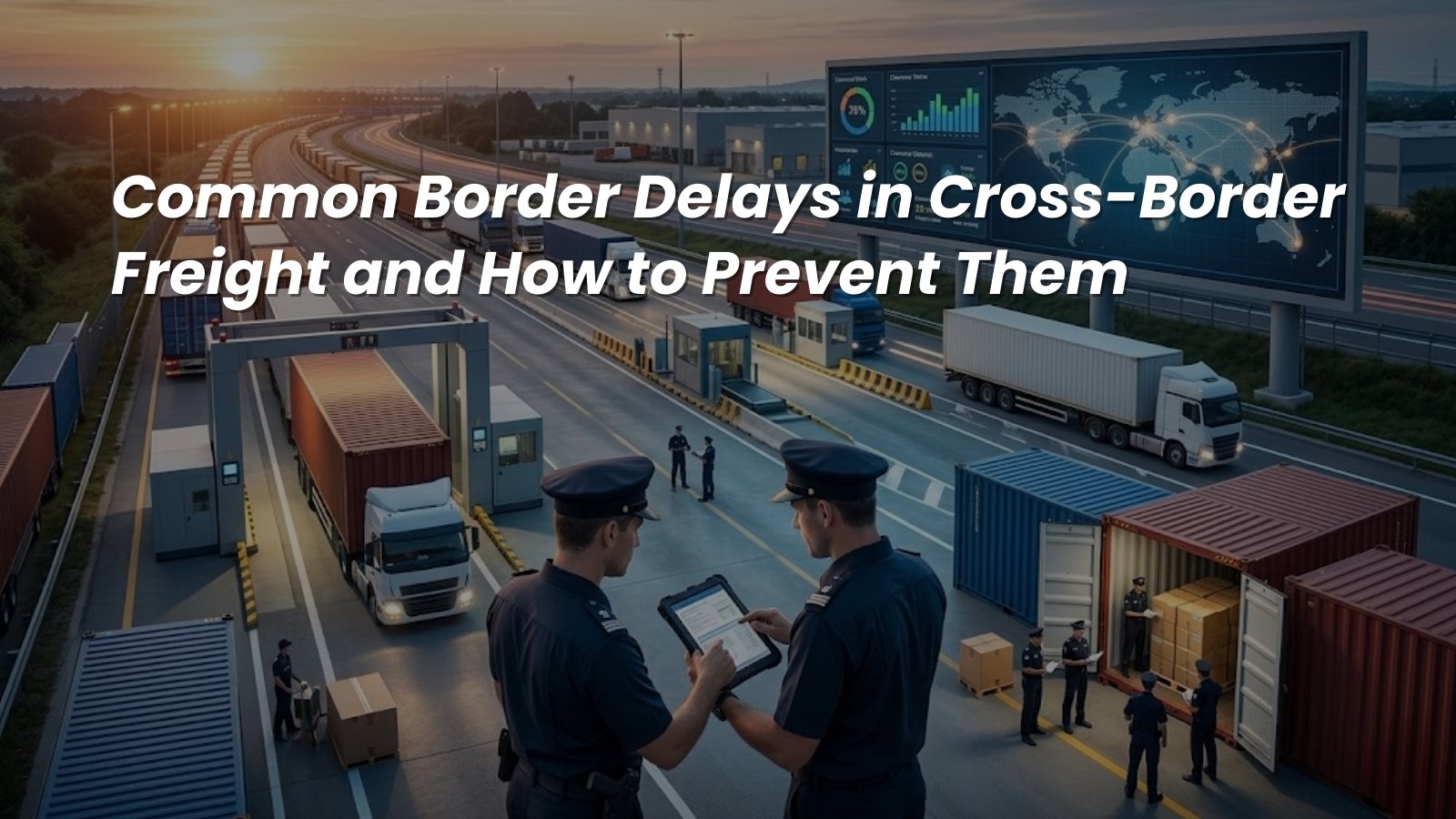
Cross-border freight introduces an additional layer of complexity compared to domestic transportation. While the physical movement of goods may be straightforward, border clearance introduces regulatory, administrative, and operational variables that can slow shipments unexpectedly. Understanding the most common causes of border delays allows businesses to prepare proactively and reduce disruption to supply chains.
Why Border Delays Happen
Border checkpoints exist to enforce trade regulations, collect duties, ensure compliance, and prevent restricted goods from entering a country. These responsibilities require document verification, risk assessment, and sometimes physical inspection. Delays occur when documentation is incomplete, inconsistent, or when shipments are flagged for further review.
Unlike domestic freight delays that are often caused by weather or traffic, border delays are typically administrative or compliance-driven. That means many of them are preventable with proper preparation.
Documentation Inconsistencies
One of the most common causes of delay is mismatched information across documents. For example, if the commercial invoice lists a different weight than the packing list, or if the product description differs between forms, customs systems may flag the shipment automatically.
Even minor discrepancies such as spelling differences in company names or inconsistent address formats can slow processing. Border authorities rely on document matching systems that compare multiple data points across submissions.
Incorrect HS Classification
Harmonized System (HS) codes determine how goods are classified for tariff and regulatory purposes. Misclassification can lead to reassessment of duties, additional review, or penalties. In some cases, customs may require further documentation to verify classification accuracy.
Incorrect classification is particularly common when businesses ship new products or enter new trade lanes without confirming tariff codes beforehand.
Unpaid Duties and Taxes
Customs authorities require duties and taxes to be settled before releasing cargo. If payment arrangements are unclear or incomplete, the shipment remains on hold. In high-volume trade lanes, even short payment delays can extend delivery timelines significantly.
Some companies use customs bonds or deferred payment programs to streamline this process, but these must be arranged in advance.
Missing Permits or Regulatory Approvals
Certain commodities require special permits. Food products, pharmaceuticals, chemicals, automotive parts, and electronics may be subject to additional regulatory oversight. If required certifications are not included in the documentation package, clearance will pause until compliance is confirmed.
Businesses entering new markets often underestimate these requirements, leading to first-time shipment delays.
Random or Risk-Based Inspections
Customs authorities use risk assessment systems to select shipments for inspection. These selections may be random or triggered by commodity type, shipment value, country of origin, or historical compliance data.
Physical inspections require cargo to be opened and examined. Even when documents are accurate, inspection queues can create additional waiting time at busy border crossings.
High Traffic and Seasonal Congestion
Border crossings experience fluctuating traffic volumes. Peak retail seasons, agricultural export cycles, and holiday periods increase shipment flow. Infrastructure capacity at border checkpoints may not expand proportionally, leading to congestion.
Weather conditions can further compound congestion, especially at land crossings where road conditions impact vehicle flow.
Carrier and Driver Documentation Issues
For road-based cross-border freight, drivers must carry specific documentation including transit permits, vehicle registration, and clearance references. If a driver arrives at the checkpoint without required paperwork, the shipment may be turned back or held until documentation is corrected.
Ensuring that carriers understand border requirements reduces this risk.
System or Technology Disruptions
Modern customs systems rely heavily on digital submission platforms. System outages or technical errors can temporarily halt processing. While rare, these disruptions can affect large volumes of freight simultaneously.
Businesses cannot prevent system failures, but early document submission may reduce the impact of processing delays.
How to Prevent Common Border Delays
Pre-Submission of Documents
Submitting documents electronically before the shipment reaches the border allows customs to begin review early. Pre-clearance significantly reduces dwell time at high-traffic crossings.
Internal Documentation Review
Establishing a two-step internal review process catches inconsistencies before submission. Cross-checking invoice values, product descriptions, and weight information prevents avoidable holds.
Confirming HS Codes in Advance
Verifying product classification prior to shipment avoids mid-clearance reclassification. Maintaining a product classification database supports repeat accuracy.
Working With Customs Brokers
Customs brokers specialize in compliance coordination. They monitor regulatory updates, submit documentation correctly, and communicate directly with authorities when issues arise. For businesses with frequent cross-border shipments, broker coordination often improves consistency.
Building Time Buffers
Even with perfect documentation, inspections and congestion remain possible. Including reasonable buffer time in delivery schedules protects production timelines from unexpected border dwell time.
Monitoring Trade Lane Performance
Analyzing historical shipment data reveals patterns in specific border crossings. Some checkpoints consistently process freight faster than others. Adjusting routing strategies may improve reliability.
Clear Communication Between All Parties
Cross-border shipments involve multiple stakeholders: shipper, carrier, customs broker, and consignee. Ensuring everyone has consistent information prevents last-minute corrections that can delay clearance.
Frequently Asked Questions
What is the most common cause of border delays?
Documentation inconsistencies and missing regulatory approvals are among the most common causes.
Can inspections be avoided?
Not entirely. Inspections may be random or risk-based, but accurate documentation reduces likelihood.
Do all shipments require duties?
It depends on the trade agreement and commodity classification.
Is congestion predictable?
Seasonal congestion is often predictable, but daily traffic fluctuations vary.
How can companies improve border clearance speed?
By submitting documents early, verifying classification, and coordinating with customs professionals.