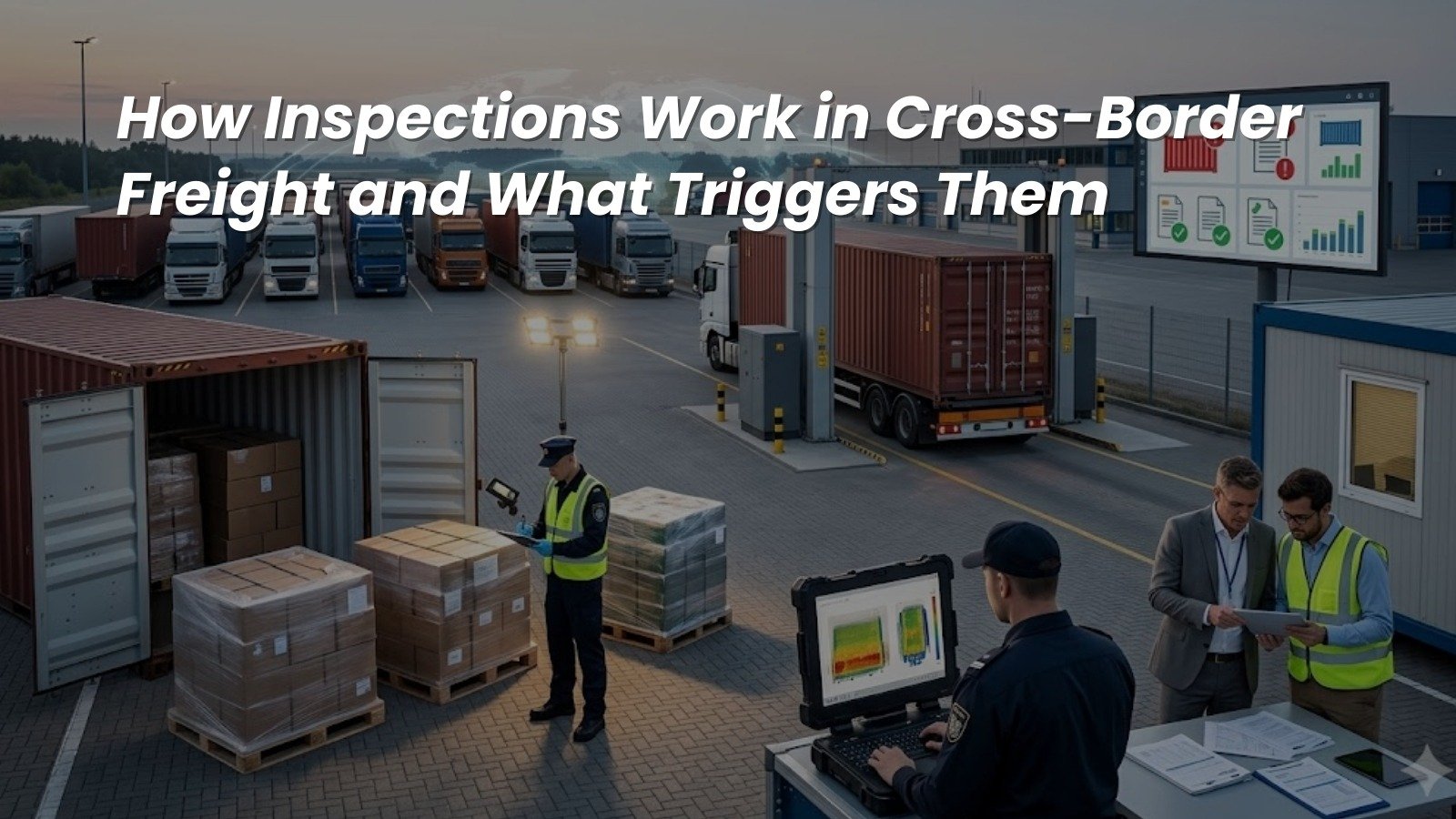
Border inspections are one of the most misunderstood parts of cross-border freight. Many businesses assume inspections are random or unpredictable. In reality, modern customs systems operate using structured, risk-based assessment models that evaluate shipments before and after they arrive at the border.
Understanding how inspections work—and what commonly triggers them—helps businesses reduce unnecessary delays and better plan transit timelines.
Are Border Inspections Random?
Most countries use automated risk management systems. These systems analyze data submitted through electronic filings before the shipment physically reaches the border. The system evaluates factors such as:
• HS classification
• Declared value
• Importer history
• Country of origin
• Product category
• Prior compliance performance
Shipments that match high-risk patterns may be flagged for review. Others may clear automatically without physical inspection.
Types of Border Inspections
Not all inspections are physical. There are typically three main types:
1. Document Review – Authorities verify paperwork accuracy without opening the cargo.
2. Non-Intrusive Inspection – X-ray or scanning equipment reviews cargo contents.
3. Physical Examination – Officers open and inspect cargo directly.
The level of inspection depends on the risk profile generated by the customs system.
Common Triggers for Inspection
While inspection algorithms vary by country, certain factors frequently increase inspection probability.
Inconsistent Documentation
If product descriptions vary between invoice and packing list, or if declared weight differs significantly from expected averages, the system may flag the shipment.
Unusual Declared Values
Values significantly lower than market norms can trigger suspicion of undervaluation.
High-Risk Product Categories
Certain goods—such as food, pharmaceuticals, chemicals, and electronics—are subject to additional regulatory scrutiny.
New Importers
Companies without established compliance history may face higher inspection frequency initially.
Trade Agreement Claims
When claiming preferential duty rates under trade agreements, authorities may verify eligibility more closely.
Random Sampling
Even low-risk shipments are occasionally selected to maintain enforcement credibility.
How Inspections Affect Transit Time
Inspection duration varies widely. Document reviews may clear within hours, while physical examinations can take one to several days depending on cargo type and border volume.
Additional delays may occur if cargo must be unloaded for inspection, particularly in consolidated or palletized shipments.
Who Pays for Inspection Costs?
Inspection-related costs may include:
• Handling fees
• Storage charges
• Labor for unloading and reloading
• Administrative processing fees
Typically, these costs fall on the importer or exporter of record, depending on contract terms.
How to Reduce Inspection Risk
While inspections cannot be eliminated entirely, businesses can reduce their likelihood by focusing on compliance consistency.
Best practices include:
• Accurate and detailed product descriptions
• Correct HS classification
• Consistent valuation methodology
• Organized documentation submission
• Early digital filing
• Maintaining strong compliance records
Long-term compliance performance significantly influences inspection frequency.
The Role of Customs Brokers During Inspections
Customs brokers act as intermediaries during inspection events. They communicate with authorities, clarify documentation, and coordinate responses if additional information is required.
Fast response to customs inquiries often reduces inspection duration.
Special Agency Inspections
Some goods require inspection by specialized agencies in addition to customs authorities. Examples include:
• Agriculture departments
• Health authorities
• Food safety agencies
• Environmental regulators
These inspections operate under separate regulatory frameworks and may extend clearance timelines.
Physical Inspection Procedures
When physical inspection occurs, the shipment may be moved to a designated inspection area. Officers may open containers, examine packaging, and verify product labeling.
Improper packaging can complicate re-securing the cargo after inspection, potentially increasing risk of damage.
Planning for Inspection Risk
Cross-border transit planning should incorporate the possibility of inspection. Building structured time buffers into supply chain schedules reduces operational stress when inspections occur.
Businesses with time-sensitive cargo may consider earlier departure or additional inventory safety stock when inspection probability is high.
Audit and Post-Clearance Review
In some cases, authorities conduct post-clearance audits rather than immediate inspections. This involves reviewing documentation after goods have already entered the country.
Maintaining organized records ensures smoother audit processes and reduces financial exposure.
Common Misconceptions
Inspection does not automatically imply wrongdoing. Many inspections are procedural or risk-based selections.
Additionally, inspections are not solely determined by the carrier. Shipper compliance plays a central role.
Case Example: Electronics Shipment
An electronics importer declared goods under a general classification rather than the more specific tariff code required. The mismatch triggered an inspection that delayed clearance by two days. After correction and consistent classification in future shipments, inspection frequency decreased.
Case Example: Agricultural Goods
A food exporter failed to attach updated phytosanitary certificates. The shipment was held pending documentation verification. Proper document checklist management would have prevented the delay.
Balancing Risk and Efficiency
The goal is not to eliminate inspections entirely but to manage compliance in a way that reduces unnecessary scrutiny. Consistency builds credibility with customs authorities over time.
Frequently Asked Questions
Why was my shipment selected for inspection?
Selection is often based on automated risk assessment systems evaluating documentation and historical data.
How long does an inspection usually take?
Document reviews may take hours; physical inspections can take one or more days depending on cargo type and workload.
Can inspections be avoided completely?
No, but consistent compliance reduces frequency.
Do inspections increase shipping costs?
They may add storage, handling, and administrative fees.
Does claiming a trade agreement increase inspection risk?
It may increase documentation review scrutiny, especially if eligibility requirements are complex.