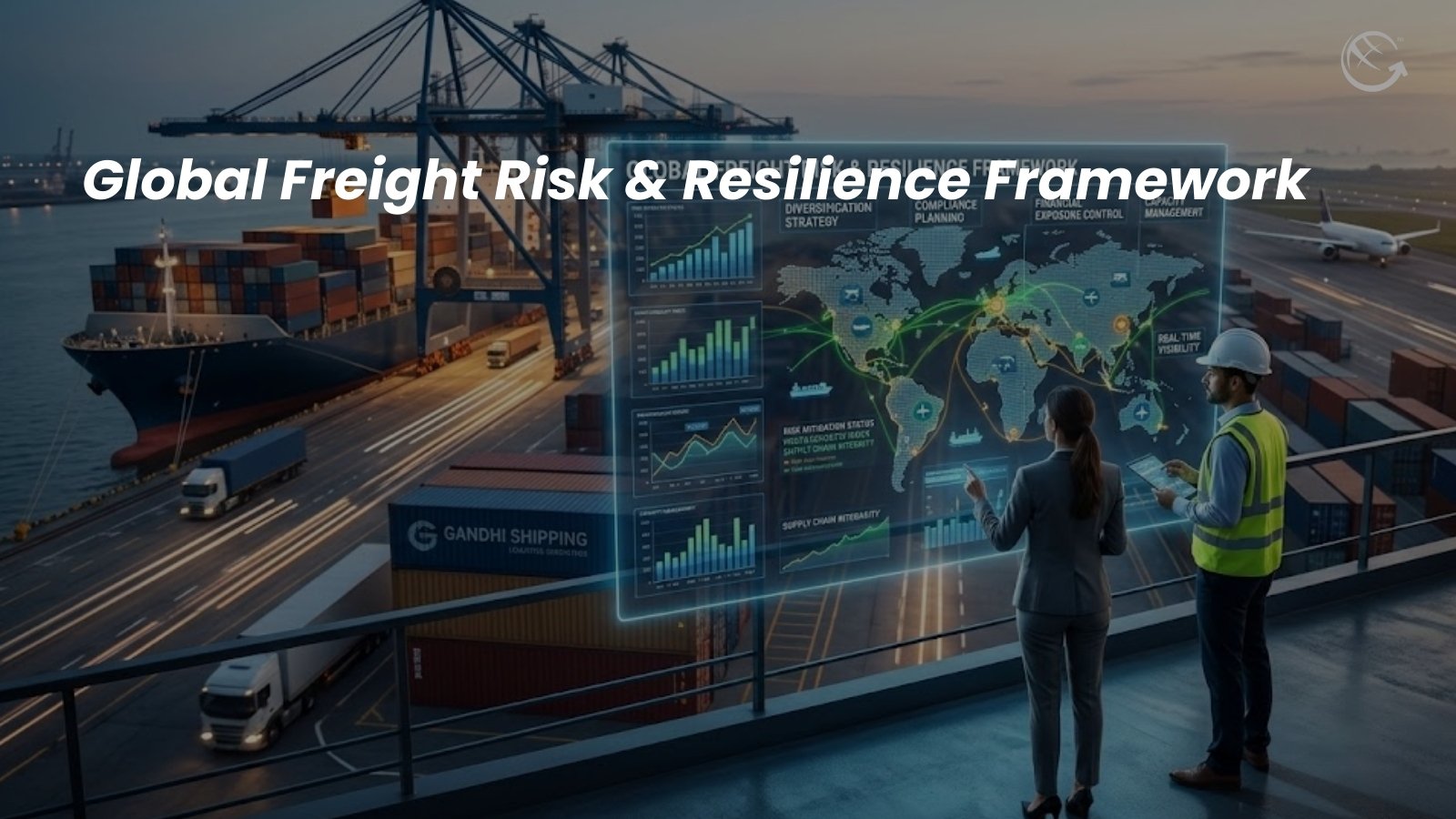
Global freight networks operate in an environment defined by uncertainty. Weather disruptions, geopolitical shifts, regulatory changes, port congestion, carrier capacity cycles, labor strikes, tariff updates, infrastructure failures, and economic volatility all influence how cargo moves across borders. While risk in logistics cannot be eliminated, it can be structured, anticipated, and managed. Businesses that treat freight risk as an occasional disruption tend to react late and incur high recovery costs. Companies that build resilience into their freight strategy reduce exposure, stabilize cost, and protect operational continuity.
Freight risk exists across multiple layers. The first layer is transportation risk. Ocean freight may face schedule instability, blank sailings, or equipment shortages. Air freight may experience capacity limitations during peak demand. Trucking operations can encounter route restrictions, border delays, and driver shortages. Each mode carries unique operational variables that affect reliability.
The second layer involves regulatory and compliance risk. Changes in customs procedures, inspection protocols, duty classifications, or trade agreements can alter transit time and cost structure overnight. Documentation inconsistencies, HS code errors, and valuation discrepancies may result in shipment holds or penalties. Compliance risk is often underestimated because it is invisible until triggered.
The third layer relates to financial exposure. Freight rate volatility, fuel fluctuations, currency exchange movements, and tariff revisions influence total landed cost. Businesses operating on thin margins are particularly sensitive to sudden increases in freight spend or duty rates. Financial resilience requires proactive monitoring rather than reactive cost control.
The fourth layer is operational coordination risk. Misalignment between procurement schedules, warehouse capacity, carrier booking timelines, and customs clearance planning often creates bottlenecks. These breakdowns generate demurrage, detention, storage fees, and expedited freight costs. Many of these expenses are avoidable with stronger internal coordination.
A structured freight resilience framework begins with risk mapping. Companies should identify the most critical trade lanes, highest-value cargo categories, most time-sensitive products, and most disruption-prone ports or corridors. Prioritizing risk exposure enables targeted mitigation strategies rather than generalized contingency planning.
Diversification is one of the strongest resilience tools. Relying on a single carrier, single port, or single supplier increases vulnerability. Multi-carrier strategies, alternative routing options, and secondary port access reduce dependency on one operational pathway. While diversification may appear more complex, it lowers concentration risk.
Capacity planning also plays a central role in resilience. During high-demand cycles, freight space becomes scarce. Businesses that secure baseline contractual allocations are less exposed to extreme spot rate spikes. A hybrid contract model—combining stable long-term agreements with flexible spot capacity—balances predictability and agility.
Digital visibility tools significantly strengthen resilience. Real-time shipment tracking allows early identification of delays, enabling proactive adjustments. When cargo status is transparent, warehouse scheduling and customer communication can be adapted quickly. Lack of visibility often amplifies disruption because corrective action starts too late.
Buffer strategy is another foundational element. Just-in-time models reduce inventory carrying cost but increase disruption exposure. Strategic buffer inventory for high-priority products provides protection against temporary freight interruptions. The correct balance depends on product turnover, storage cost, and market demand sensitivity.
Cold chain shipments require enhanced resilience planning. Temperature-controlled freight faces higher risk of spoilage if delays occur. Backup power systems at ports, temperature monitoring technology, and alternative routing options reduce the risk of product loss. Resilience in cold chain logistics must include both transportation and monitoring safeguards.
Financial hedging mechanisms can also reduce volatility exposure. Fuel surcharge management, currency risk hedging, and tariff scenario planning protect margins during economic shifts. Freight forecasting models that incorporate multiple demand and rate scenarios allow businesses to anticipate cost fluctuations before they materialize.
Compliance resilience requires systematic documentation accuracy. Pre-clearance preparation, HS code validation, internal compliance audits, and regulatory monitoring reduce the probability of shipment holds. A consistent documentation review process strengthens reliability across all trade lanes.
Communication frameworks are often overlooked in resilience planning. During disruptions, internal alignment between logistics, procurement, finance, and customer service teams determines response speed. Structured escalation protocols and clear accountability reduce confusion when rapid decisions are required.
Scenario planning is an advanced resilience technique. Modeling hypothetical disruptions—such as port closure, tariff increase, or capacity shortage—reveals operational weak points. Simulation exercises enable organizations to prepare alternative routing plans before real-world events occur.
Port selection strategy influences resilience significantly. Some ports experience recurring congestion, labor instability, or infrastructure constraints. While freight rates may be competitive, operational instability increases indirect cost. Evaluating port performance history supports more stable route selection.
Warehouse network flexibility contributes to resilience. Facilities positioned near multiple transport corridors allow rerouting flexibility when one gateway becomes congested. Distributed warehousing can absorb disruption more effectively than a single centralized location.
Insurance planning protects against catastrophic risk. Cargo insurance, while adding minor cost, prevents severe financial loss from theft, damage, or unforeseen incidents. Insurance should be aligned with product value and risk profile.
Resilience also depends on performance measurement. Tracking on-time delivery rates, inspection frequency, dwell time at ports, demurrage incidence, expedited freight usage, and cost variance provides insight into vulnerability patterns. Data-driven review cycles identify recurring exposure areas.
Ultimately, freight resilience is not about preventing disruption entirely. It is about reducing sensitivity to disruption. Businesses that expect volatility build systems capable of adapting without operational collapse. Stability emerges from preparation, diversification, transparency, and coordination.
In global trade, uncertainty is permanent. The competitive advantage belongs to companies that plan for instability instead of assuming stability. A structured freight risk and resilience framework transforms unpredictability from a threat into a manageable variable, protecting both margin and operational continuity.
Global Freight Risk & Resilience Framework: Building a Stable and Adaptive International Logistics Strategy