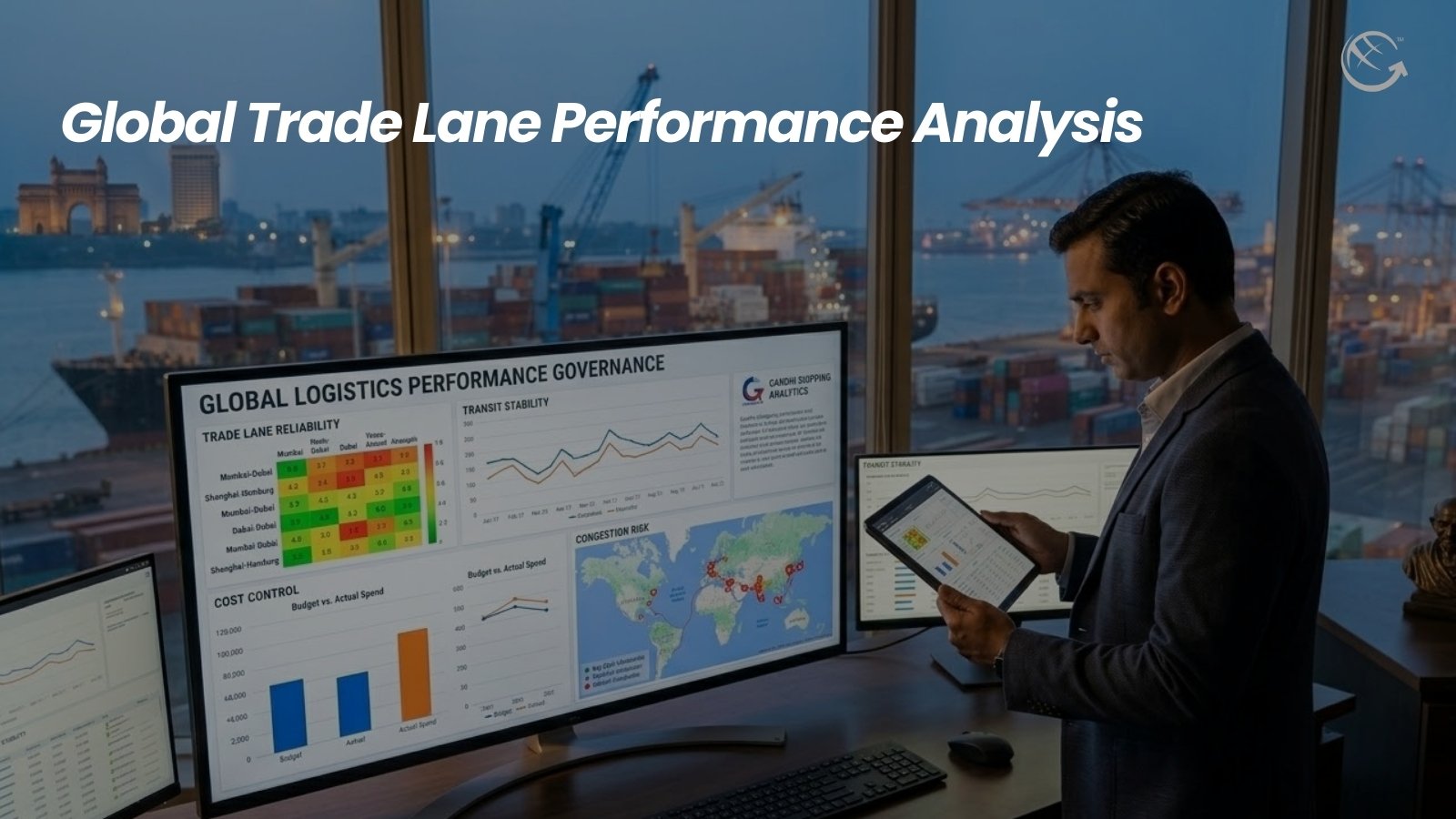
Trade lane performance analysis evaluates reliability, transit predictability, congestion exposure, and cost stability across international corridors.
In global logistics, performance stability is not accidental. It is engineered through structured planning, measurable controls, and consistent operational discipline. Organizations that treat freight as a transactional activity often struggle with volatility. Those that build structured frameworks around planning, cost modeling, routing, compliance, and performance tracking create predictable results even in unstable trade environments.
A mature freight strategy begins with visibility. Without accurate data on transit times, dwell periods, cost breakdowns, and inspection frequency, optimization becomes guesswork. Reliable organizations establish reporting systems that monitor carrier performance, port congestion patterns, customs processing timelines, and inland coordination accuracy. These indicators provide early warning signals before disruptions escalate.
Cost control must be layered. Freight rates represent only a portion of total exposure. Duties, storage, detention, fuel surcharges, compliance corrections, and reactive expedited shipments all contribute to overall landed cost. Effective cost strategy requires separating base cost, variable cost, and risk-driven cost. Once categorized, each can be managed through different planning controls.
Route selection influences reliability more than rate negotiations alone. Some ports consistently deliver stable throughput, while others experience recurring congestion cycles. Selecting lanes based on historical performance data reduces volatility exposure. Stability often outweighs marginal rate savings.
Capacity planning is essential in competitive cycles. During peak season, space constraints can multiply costs. Securing balanced allocations between contract and spot markets reduces sudden exposure. Diversification across carriers and modes strengthens resilience.
Compliance precision reduces invisible cost leakage. Minor documentation inconsistencies frequently trigger inspection delays and storage penalties. A standardized documentation review process mitigates recurring errors and reduces operational friction.
Warehouse coordination connects transportation with inventory flow. Aligning inbound arrival schedules with storage availability and outbound dispatch planning prevents bottlenecks. Misalignment increases dwell time and unnecessary expense.
Technology enhances predictability when applied correctly. Real-time tracking systems, digital documentation validation, and analytics dashboards allow proactive decision-making instead of reactive cost absorption.
Scenario planning strengthens preparedness. Modeling disruptions such as port closures, regulatory shifts, or fuel spikes allows organizations to test alternative routing and financial impact before crises occur.
Ultimately, sustainable freight performance requires discipline rather than aggressive negotiation alone. Predictability, transparency, diversification, and structured review cycles form the foundation of stable global logistics execution.
This framework emphasizes long-term optimization over short-term rate reduction. Businesses that integrate planning, compliance, capacity control, and visibility tools build supply chains capable of adapting without destabilizing cost or service performance.
Global logistics remains dynamic, but structured management transforms unpredictability into manageable variables. Strategic freight governance supports margin protection, delivery reliability, and operational continuity across trade lanes.
Trade lane performance analysis evaluates reliability, transit predictability, congestion exposure, and cost stability across international corridors.
In global logistics, performance stability is not accidental. It is engineered through structured planning, measurable controls, and consistent operational discipline. Organizations that treat freight as a transactional activity often struggle with volatility. Those that build structured frameworks around planning, cost modeling, routing, compliance, and performance tracking create predictable results even in unstable trade environments.
A mature freight strategy begins with visibility. Without accurate data on transit times, dwell periods, cost breakdowns, and inspection frequency, optimization becomes guesswork. Reliable organizations establish reporting systems that monitor carrier performance, port congestion patterns, customs processing timelines, and inland coordination accuracy. These indicators provide early warning signals before disruptions escalate.
Cost control must be layered. Freight rates represent only a portion of total exposure. Duties, storage, detention, fuel surcharges, compliance corrections, and reactive expedited shipments all contribute to overall landed cost. Effective cost strategy requires separating base cost, variable cost, and risk-driven cost. Once categorized, each can be managed through different planning controls.
Route selection influences reliability more than rate negotiations alone. Some ports consistently deliver stable throughput, while others experience recurring congestion cycles. Selecting lanes based on historical performance data reduces volatility exposure. Stability often outweighs marginal rate savings.
Capacity planning is essential in competitive cycles. During peak season, space constraints can multiply costs. Securing balanced allocations between contract and spot markets reduces sudden exposure. Diversification across carriers and modes strengthens resilience.
Compliance precision reduces invisible cost leakage. Minor documentation inconsistencies frequently trigger inspection delays and storage penalties. A standardized documentation review process mitigates recurring errors and reduces operational friction.
Warehouse coordination connects transportation with inventory flow. Aligning inbound arrival schedules with storage availability and outbound dispatch planning prevents bottlenecks. Misalignment increases dwell time and unnecessary expense.
Technology enhances predictability when applied correctly. Real-time tracking systems, digital documentation validation, and analytics dashboards allow proactive decision-making instead of reactive cost absorption.
Scenario planning strengthens preparedness. Modeling disruptions such as port closures, regulatory shifts, or fuel spikes allows organizations to test alternative routing and financial impact before crises occur.
Ultimately, sustainable freight performance requires discipline rather than aggressive negotiation alone. Predictability, transparency, diversification, and structured review cycles form the foundation of stable global logistics execution.
This framework emphasizes long-term optimization over short-term rate reduction. Businesses that integrate planning, compliance, capacity control, and visibility tools build supply chains capable of adapting without destabilizing cost or service performance.
Global logistics remains dynamic, but structured management transforms unpredictability into manageable variables. Strategic freight governance supports margin protection, delivery reliability, and operational continuity across trade lanes.
Trade lane performance analysis evaluates reliability, transit predictability, congestion exposure, and cost stability across international corridors.
In global logistics, performance stability is not accidental. It is engineered through structured planning, measurable controls, and consistent operational discipline. Organizations that treat freight as a transactional activity often struggle with volatility. Those that build structured frameworks around planning, cost modeling, routing, compliance, and performance tracking create predictable results even in unstable trade environments.
A mature freight strategy begins with visibility. Without accurate data on transit times, dwell periods, cost breakdowns, and inspection frequency, optimization becomes guesswork. Reliable organizations establish reporting systems that monitor carrier performance, port congestion patterns, customs processing timelines, and inland coordination accuracy. These indicators provide early warning signals before disruptions escalate.
Cost control must be layered. Freight rates represent only a portion of total exposure. Duties, storage, detention, fuel surcharges, compliance corrections, and reactive expedited shipments all contribute to overall landed cost. Effective cost strategy requires separating base cost, variable cost, and risk-driven cost. Once categorized, each can be managed through different planning controls.
Route selection influences reliability more than rate negotiations alone. Some ports consistently deliver stable throughput, while others experience recurring congestion cycles. Selecting lanes based on historical performance data reduces volatility exposure. Stability often outweighs marginal rate savings.
Capacity planning is essential in competitive cycles. During peak season, space constraints can multiply costs. Securing balanced allocations between contract and spot markets reduces sudden exposure. Diversification across carriers and modes strengthens resilience.
Compliance precision reduces invisible cost leakage. Minor documentation inconsistencies frequently trigger inspection delays and storage penalties. A standardized documentation review process mitigates recurring errors and reduces operational friction.
Warehouse coordination connects transportation with inventory flow. Aligning inbound arrival schedules with storage availability and outbound dispatch planning prevents bottlenecks. Misalignment increases dwell time and unnecessary expense.
Technology enhances predictability when applied correctly. Real-time tracking systems, digital documentation validation, and analytics dashboards allow proactive decision-making instead of reactive cost absorption.
Scenario planning strengthens preparedness. Modeling disruptions such as port closures, regulatory shifts, or fuel spikes allows organizations to test alternative routing and financial impact before crises occur.
Ultimately, sustainable freight performance requires discipline rather than aggressive negotiation alone. Predictability, transparency, diversification, and structured review cycles form the foundation of stable global logistics execution.
This framework emphasizes long-term optimization over short-term rate reduction. Businesses that integrate planning, compliance, capacity control, and visibility tools build supply chains capable of adapting without destabilizing cost or service performance.
Global logistics remains dynamic, but structured management transforms unpredictability into manageable variables. Strategic freight governance supports margin protection, delivery reliability, and operational continuity across trade lanes.
Trade lane performance analysis evaluates reliability, transit predictability, congestion exposure, and cost stability across international corridors.
In global logistics, performance stability is not accidental. It is engineered through structured planning, measurable controls, and consistent operational discipline. Organizations that treat freight as a transactional activity often struggle with volatility. Those that build structured frameworks around planning, cost modeling, routing, compliance, and performance tracking create predictable results even in unstable trade environments.
A mature freight strategy begins with visibility. Without accurate data on transit times, dwell periods, cost breakdowns, and inspection frequency, optimization becomes guesswork. Reliable organizations establish reporting systems that monitor carrier performance, port congestion patterns, customs processing timelines, and inland coordination accuracy. These indicators provide early warning signals before disruptions escalate.
Cost control must be layered. Freight rates represent only a portion of total exposure. Duties, storage, detention, fuel surcharges, compliance corrections, and reactive expedited shipments all contribute to overall landed cost. Effective cost strategy requires separating base cost, variable cost, and risk-driven cost. Once categorized, each can be managed through different planning controls.
Route selection influences reliability more than rate negotiations alone. Some ports consistently deliver stable throughput, while others experience recurring congestion cycles. Selecting lanes based on historical performance data reduces volatility exposure. Stability often outweighs marginal rate savings.
Capacity planning is essential in competitive cycles. During peak season, space constraints can multiply costs. Securing balanced allocations between contract and spot markets reduces sudden exposure. Diversification across carriers and modes strengthens resilience.
Compliance precision reduces invisible cost leakage. Minor documentation inconsistencies frequently trigger inspection delays and storage penalties. A standardized documentation review process mitigates recurring errors and reduces operational friction.
Warehouse coordination connects transportation with inventory flow. Aligning inbound arrival schedules with storage availability and outbound dispatch planning prevents bottlenecks. Misalignment increases dwell time and unnecessary expense.
Technology enhances predictability when applied correctly. Real-time tracking systems, digital documentation validation, and analytics dashboards allow proactive decision-making instead of reactive cost absorption.
Scenario planning strengthens preparedness. Modeling disruptions such as port closures, regulatory shifts, or fuel spikes allows organizations to test alternative routing and financial impact before crises occur.
Ultimately, sustainable freight performance requires discipline rather than aggressive negotiation alone. Predictability, transparency, diversification, and structured review cycles form the foundation of stable global logistics execution.
This framework emphasizes long-term optimization over short-term rate reduction. Businesses that integrate planning, compliance, capacity control, and visibility tools build supply chains capable of adapting without destabilizing cost or service performance.
Global logistics remains dynamic, but structured management transforms unpredictability into manageable variables. Strategic freight governance supports margin protection, delivery reliability, and operational continuity across trade lanes.
Trade lane performance analysis evaluates reliability, transit predictability, congestion exposure, and cost stability across international corridors.
In global logistics, performance stability is not accidental. It is engineered through structured planning, measurable controls, and consistent operational discipline. Organizations that treat freight as a transactional activity often struggle with volatility. Those that build structured frameworks around planning, cost modeling, routing, compliance, and performance tracking create predictable results even in unstable trade environments.
A mature freight strategy begins with visibility. Without accurate data on transit times, dwell periods, cost breakdowns, and inspection frequency, optimization becomes guesswork. Reliable organizations establish reporting systems that monitor carrier performance, port congestion patterns, customs processing timelines, and inland coordination accuracy. These indicators provide early warning signals before disruptions escalate.
Cost control must be layered. Freight rates represent only a portion of total exposure. Duties, storage, detention, fuel surcharges, compliance corrections, and reactive expedited shipments all contribute to overall landed cost. Effective cost strategy requires separating base cost, variable cost, and risk-driven cost. Once categorized, each can be managed through different planning controls.
Route selection influences reliability more than rate negotiations alone. Some ports consistently deliver stable throughput, while others experience recurring congestion cycles. Selecting lanes based on historical performance data reduces volatility exposure. Stability often outweighs marginal rate savings.
Capacity planning is essential in competitive cycles. During peak season, space constraints can multiply costs. Securing balanced allocations between contract and spot markets reduces sudden exposure. Diversification across carriers and modes strengthens resilience.
Compliance precision reduces invisible cost leakage. Minor documentation inconsistencies frequently trigger inspection delays and storage penalties. A standardized documentation review process mitigates recurring errors and reduces operational friction.
Warehouse coordination connects transportation with inventory flow. Aligning inbound arrival schedules with storage availability and outbound dispatch planning prevents bottlenecks. Misalignment increases dwell time and unnecessary expense.
Technology enhances predictability when applied correctly. Real-time tracking systems, digital documentation validation, and analytics dashboards allow proactive decision-making instead of reactive cost absorption.
Scenario planning strengthens preparedness. Modeling disruptions such as port closures, regulatory shifts, or fuel spikes allows organizations to test alternative routing and financial impact before crises occur.
Ultimately, sustainable freight performance requires discipline rather than aggressive negotiation alone. Predictability, transparency, diversification, and structured review cycles form the foundation of stable global logistics execution.
This framework emphasizes long-term optimization over short-term rate reduction. Businesses that integrate planning, compliance, capacity control, and visibility tools build supply chains capable of adapting without destabilizing cost or service performance.
Global logistics remains dynamic, but structured management transforms unpredictability into manageable variables. Strategic freight governance supports margin protection, delivery reliability, and operational continuity across trade lanes.
Trade lane performance analysis evaluates reliability, transit predictability, congestion exposure, and cost stability across international corridors.
In global logistics, performance stability is not accidental. It is engineered through structured planning, measurable controls, and consistent operational discipline. Organizations that treat freight as a transactional activity often struggle with volatility. Those that build structured frameworks around planning, cost modeling, routing, compliance, and performance tracking create predictable results even in unstable trade environments.
A mature freight strategy begins with visibility. Without accurate data on transit times, dwell periods, cost breakdowns, and inspection frequency, optimization becomes guesswork. Reliable organizations establish reporting systems that monitor carrier performance, port congestion patterns, customs processing timelines, and inland coordination accuracy. These indicators provide early warning signals before disruptions escalate.
Cost control must be layered. Freight rates represent only a portion of total exposure. Duties, storage, detention, fuel surcharges, compliance corrections, and reactive expedited shipments all contribute to overall landed cost. Effective cost strategy requires separating base cost, variable cost, and risk-driven cost. Once categorized, each can be managed through different planning controls.
Route selection influences reliability more than rate negotiations alone. Some ports consistently deliver stable throughput, while others experience recurring congestion cycles. Selecting lanes based on historical performance data reduces volatility exposure. Stability often outweighs marginal rate savings.
Capacity planning is essential in competitive cycles. During peak season, space constraints can multiply costs. Securing balanced allocations between contract and spot markets reduces sudden exposure. Diversification across carriers and modes strengthens resilience.
Compliance precision reduces invisible cost leakage. Minor documentation inconsistencies frequently trigger inspection delays and storage penalties. A standardized documentation review process mitigates recurring errors and reduces operational friction.
Warehouse coordination connects transportation with inventory flow. Aligning inbound arrival schedules with storage availability and outbound dispatch planning prevents bottlenecks. Misalignment increases dwell time and unnecessary expense.
Technology enhances predictability when applied correctly. Real-time tracking systems, digital documentation validation, and analytics dashboards allow proactive decision-making instead of reactive cost absorption.
Scenario planning strengthens preparedness. Modeling disruptions such as port closures, regulatory shifts, or fuel spikes allows organizations to test alternative routing and financial impact before crises occur.
Ultimately, sustainable freight performance requires discipline rather than aggressive negotiation alone. Predictability, transparency, diversification, and structured review cycles form the foundation of stable global logistics execution.
This framework emphasizes long-term optimization over short-term rate reduction. Businesses that integrate planning, compliance, capacity control, and visibility tools build supply chains capable of adapting without destabilizing cost or service performance.
Global logistics remains dynamic, but structured management transforms unpredictability into manageable variables. Strategic freight governance supports margin protection, delivery reliability, and operational continuity across trade lanes.
Trade lane performance analysis evaluates reliability, transit predictability, congestion exposure, and cost stability across international corridors.
In global logistics, performance stability is not accidental. It is engineered through structured planning, measurable controls, and consistent operational discipline. Organizations that treat freight as a transactional activity often struggle with volatility. Those that build structured frameworks around planning, cost modeling, routing, compliance, and performance tracking create predictable results even in unstable trade environments.
A mature freight strategy begins with visibility. Without accurate data on transit times, dwell periods, cost breakdowns, and inspection frequency, optimization becomes guesswork. Reliable organizations establish reporting systems that monitor carrier performance, port congestion patterns, customs processing timelines, and inland coordination accuracy. These indicators provide early warning signals before disruptions escalate.
Cost control must be layered. Freight rates represent only a portion of total exposure. Duties, storage, detention, fuel surcharges, compliance corrections, and reactive expedited shipments all contribute to overall landed cost. Effective cost strategy requires separating base cost, variable cost, and risk-driven cost. Once categorized, each can be managed through different planning controls.
Route selection influences reliability more than rate negotiations alone. Some ports consistently deliver stable throughput, while others experience recurring congestion cycles. Selecting lanes based on historical performance data reduces volatility exposure. Stability often outweighs marginal rate savings.
Capacity planning is essential in competitive cycles. During peak season, space constraints can multiply costs. Securing balanced allocations between contract and spot markets reduces sudden exposure. Diversification across carriers and modes strengthens resilience.
Compliance precision reduces invisible cost leakage. Minor documentation inconsistencies frequently trigger inspection delays and storage penalties. A standardized documentation review process mitigates recurring errors and reduces operational friction.
Warehouse coordination connects transportation with inventory flow. Aligning inbound arrival schedules with storage availability and outbound dispatch planning prevents bottlenecks. Misalignment increases dwell time and unnecessary expense.
Technology enhances predictability when applied correctly. Real-time tracking systems, digital documentation validation, and analytics dashboards allow proactive decision-making instead of reactive cost absorption.
Scenario planning strengthens preparedness. Modeling disruptions such as port closures, regulatory shifts, or fuel spikes allows organizations to test alternative routing and financial impact before crises occur.
Ultimately, sustainable freight performance requires discipline rather than aggressive negotiation alone. Predictability, transparency, diversification, and structured review cycles form the foundation of stable global logistics execution.
This framework emphasizes long-term optimization over short-term rate reduction. Businesses that integrate planning, compliance, capacity control, and visibility tools build supply chains capable of adapting without destabilizing cost or service performance.
Global logistics remains dynamic, but structured management transforms unpredictability into manageable variables. Strategic freight governance supports margin protection, delivery reliability, and operational continuity across trade lanes.
Trade lane performance analysis evaluates reliability, transit predictability, congestion exposure, and cost stability across international corridors.
In global logistics, performance stability is not accidental. It is engineered through structured planning, measurable controls, and consistent operational discipline. Organizations that treat freight as a transactional activity often struggle with volatility. Those that build structured frameworks around planning, cost modeling, routing, compliance, and performance tracking create predictable results even in unstable trade environments.
A mature freight strategy begins with visibility. Without accurate data on transit times, dwell periods, cost breakdowns, and inspection frequency, optimization becomes guesswork. Reliable organizations establish reporting systems that monitor carrier performance, port congestion patterns, customs processing timelines, and inland coordination accuracy. These indicators provide early warning signals before disruptions escalate.
Cost control must be layered. Freight rates represent only a portion of total exposure. Duties, storage, detention, fuel surcharges, compliance corrections, and reactive expedited shipments all contribute to overall landed cost. Effective cost strategy requires separating base cost, variable cost, and risk-driven cost. Once categorized, each can be managed through different planning controls.
Route selection influences reliability more than rate negotiations alone. Some ports consistently deliver stable throughput, while others experience recurring congestion cycles. Selecting lanes based on historical performance data reduces volatility exposure. Stability often outweighs marginal rate savings.
Capacity planning is essential in competitive cycles. During peak season, space constraints can multiply costs. Securing balanced allocations between contract and spot markets reduces sudden exposure. Diversification across carriers and modes strengthens resilience.
Compliance precision reduces invisible cost leakage. Minor documentation inconsistencies frequently trigger inspection delays and storage penalties. A standardized documentation review process mitigates recurring errors and reduces operational friction.
Warehouse coordination connects transportation with inventory flow. Aligning inbound arrival schedules with storage availability and outbound dispatch planning prevents bottlenecks. Misalignment increases dwell time and unnecessary expense.
Technology enhances predictability when applied correctly. Real-time tracking systems, digital documentation validation, and analytics dashboards allow proactive decision-making instead of reactive cost absorption.
Scenario planning strengthens preparedness. Modeling disruptions such as port closures, regulatory shifts, or fuel spikes allows organizations to test alternative routing and financial impact before crises occur.
Ultimately, sustainable freight performance requires discipline rather than aggressive negotiation alone. Predictability, transparency, diversification, and structured review cycles form the foundation of stable global logistics execution.
This framework emphasizes long-term optimization over short-term rate reduction. Businesses that integrate planning, compliance, capacity control, and visibility tools build supply chains capable of adapting without destabilizing cost or service performance.
Global logistics remains dynamic, but structured management transforms unpredictability into manageable variables. Strategic freight governance supports margin protection, delivery reliability, and operational continuity across trade lanes.