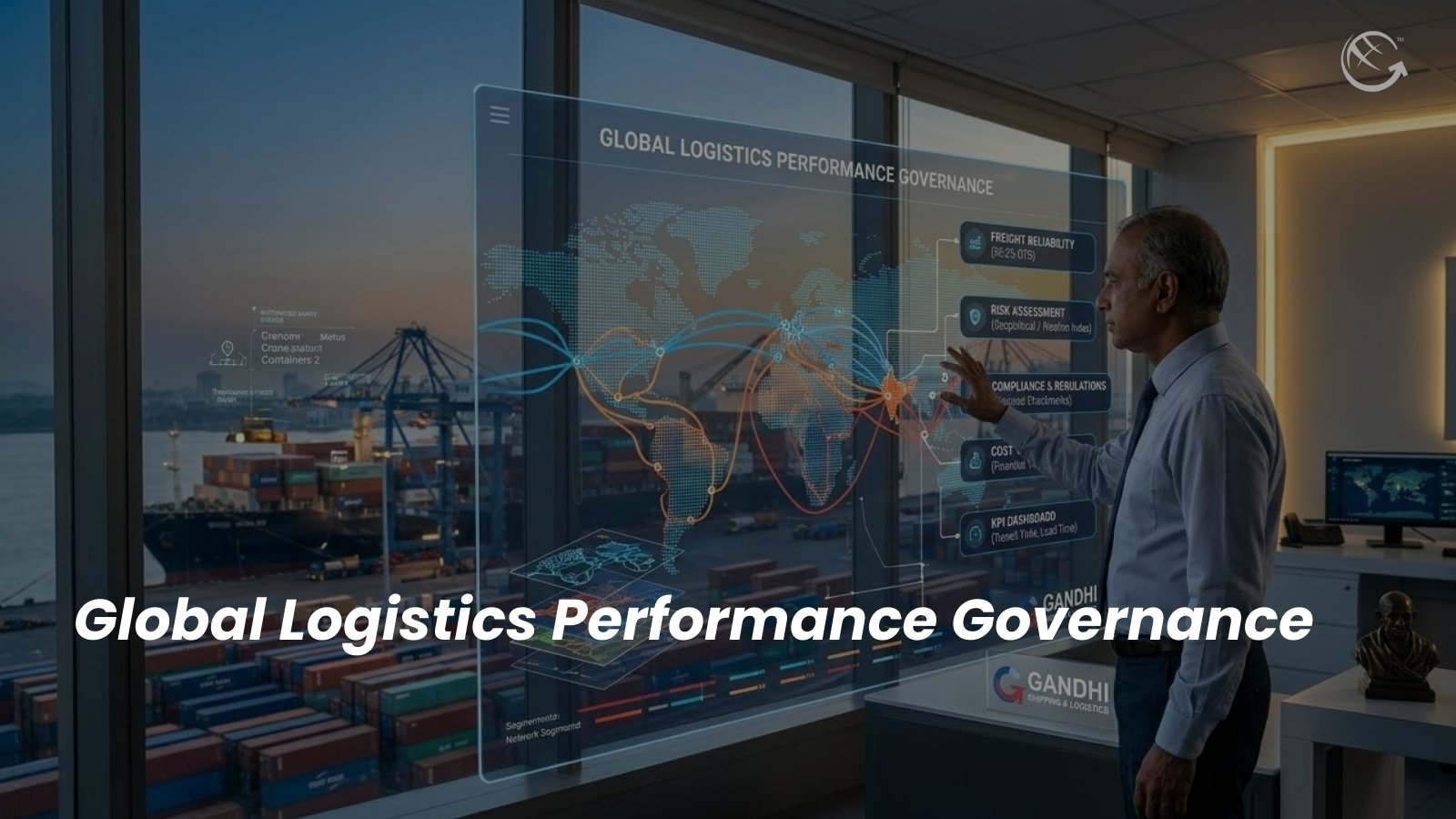
Introduction of Global Logistics Performance Governance Guide
Global logistics performance governance defines how international freight operations are measured, reviewed, and continuously improved.
Global freight systems do not fail because of single disruptions. They fail because planning, visibility, and governance mechanisms are not integrated. Authority-level logistics management requires system-level thinking that connects transportation, compliance, warehousing, cost modeling, and risk governance.
Strategic Context
Freight volatility is structural, not temporary. Capacity cycles, geopolitical shifts, regulatory reforms, port congestion, and fuel volatility continuously influence global trade lanes. Organizations that expect stability struggle when disruption appears. Those that design for variability perform consistently.
Core Framework
A structured framework includes:
• Network segmentation by risk and value
• Diversified carrier allocation
• Trade lane performance benchmarking
• Documentation governance
• Financial exposure modeling
• Integrated inventory positioning
Rather than optimizing one shipment at a time, this model optimizes predictability across the network.
Operational Execution
Execution requires cross-functional coordination. Procurement must align supplier readiness with freight booking cycles. Logistics teams must validate documentation accuracy before departure. Warehousing must synchronize inbound schedules with clearance timelines. Finance must forecast landed cost variance scenarios.
When these functions operate independently, freight volatility increases. When aligned, operational friction decreases.
Risk Management Considerations
Risk mitigation does not eliminate disruption. It reduces sensitivity to disruption. Key resilience measures include:
• Multi-port routing strategies
• Hybrid contract + spot allocation
• Buffer planning for high-priority cargo
• Real-time tracking systems
• Compliance audit readiness
Performance Metrics
Authority-level freight governance tracks measurable indicators:
• On-time departure and arrival ratio
• Port dwell time averages
• Inspection frequency
• Cost variance versus forecast
• Emergency freight usage rate
These metrics reveal structural weaknesses before they escalate into cost spikes.
Frequently Asked Questions
What differentiates authority-level freight management from standard logistics planning?
Authority-level management integrates compliance, finance, capacity strategy, and operational execution into one measurable framework.
How does diversification reduce freight volatility?
Diversification distributes exposure across carriers, routes, and ports, lowering dependency on single points of failure.
Why is landed cost modeling critical?
Freight rates alone do not represent total exposure. Duties, storage, and risk-driven delays influence final cost.
Can technology eliminate freight risk?
Technology improves visibility and response speed but does not eliminate systemic volatility.