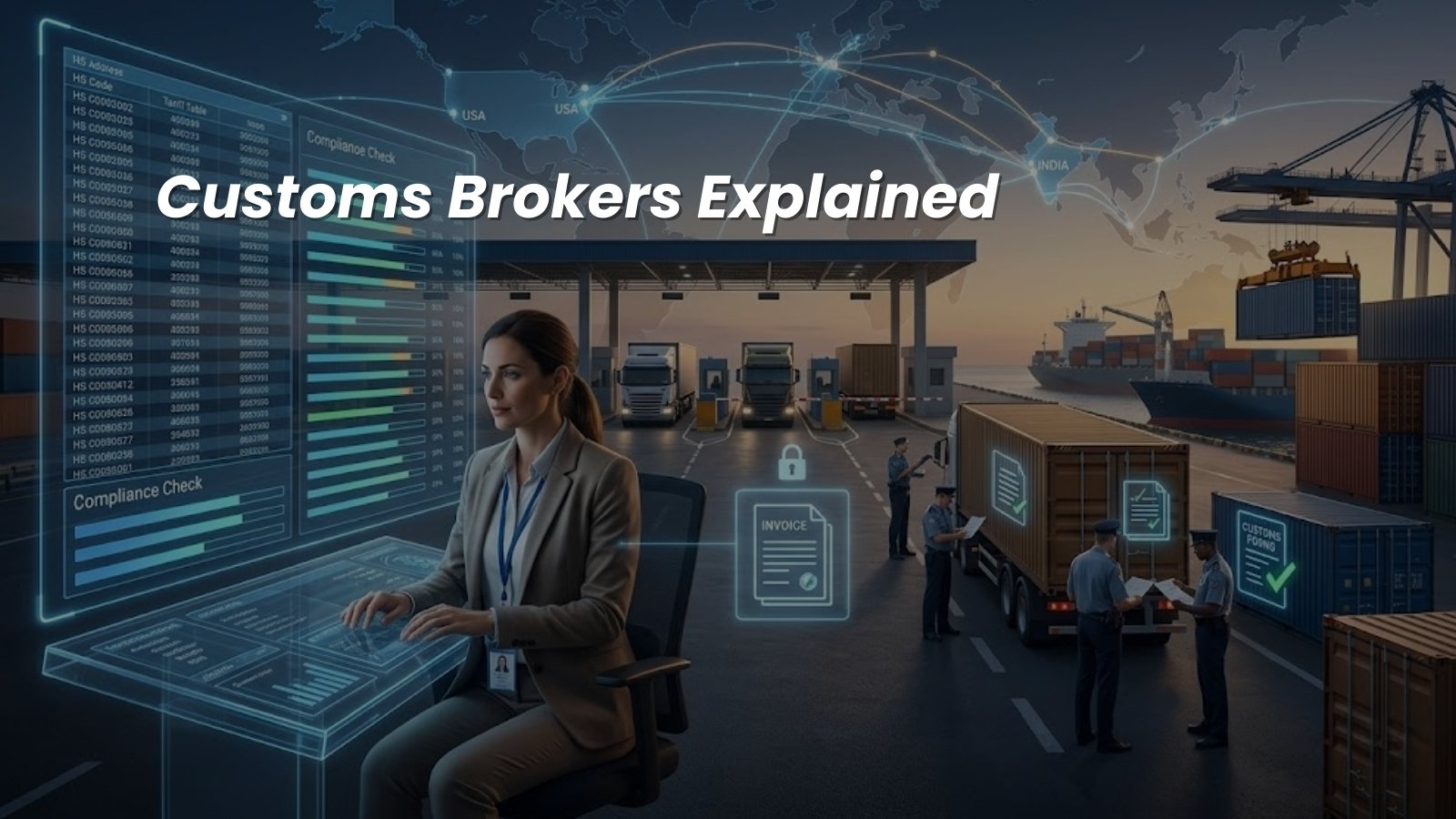
Cross-border freight introduces regulatory complexity that does not exist in domestic shipping. Customs documentation, tariff classification, duty payment, compliance checks, and inspection coordination must all be handled correctly before cargo can move into a new country. This is where customs brokers play a critical role. However, many businesses ask whether hiring a customs broker is necessary or whether they can manage the process independently.
What Is a Customs Broker?
A customs broker is a licensed professional or company authorized to prepare and submit documentation required for importing or exporting goods. Brokers act as intermediaries between businesses and government customs authorities. Their primary responsibility is to ensure shipments comply with applicable trade laws and are cleared efficiently.
Brokers are familiar with tariff schedules, regulatory updates, documentation standards, and inspection procedures. They work closely with freight carriers and importers to coordinate clearance before and during shipment arrival.
What Does a Customs Broker Actually Do?
The role of a customs broker extends beyond submitting paperwork. Their responsibilities typically include:
• Classifying goods under the correct HS code
• Calculating duties and taxes
• Preparing and submitting entry documents
• Coordinating duty payments
• Communicating with customs authorities during inspections
• Advising on regulatory requirements
• Monitoring trade policy changes
For companies with recurring cross-border shipments, brokers also maintain records that support audit compliance.
Why Customs Clearance Is More Complex Than It Appears
Many businesses assume customs clearance simply involves presenting an invoice at the border. In reality, customs authorities analyze multiple data points. They verify classification accuracy, confirm declared value, review country of origin, and check for regulatory restrictions.
Even minor errors can lead to delays. If the HS code is incorrect or if the invoice description is vague, customs may request clarification. Without proper expertise, resolving these issues quickly can be difficult.
When a Customs Broker Is Essential
Certain scenarios strongly justify using a broker:
First-time international shipments. Companies entering new markets often lack familiarity with local import requirements.
High-value or regulated goods. Pharmaceuticals, electronics, chemicals, food products, and automotive components frequently require specialized compliance documentation.
Frequent cross-border trade. Businesses shipping regularly benefit from consistent documentation management and classification oversight.
Complex trade agreements. When claiming preferential tariffs under free trade agreements, documentation must meet strict rules of origin standards.
Inspection-prone commodities. Certain goods are statistically more likely to be inspected and require closer regulatory attention.
When Businesses Sometimes Self-File
In limited circumstances, businesses may choose to self-file customs entries. This is more common when shipment volume is low and regulatory exposure is minimal. However, self-filing requires familiarity with customs systems and ongoing regulatory updates.
Even companies that self-file often consult brokers for classification confirmation or compliance audits.
Cost Considerations
Hiring a customs broker involves service fees. However, these fees are often small compared to potential penalties, duty miscalculations, or shipment delays. The financial impact of a border hold can exceed brokerage fees quickly, especially when production schedules depend on timely delivery.
Broker fees vary based on shipment complexity, commodity type, and trade lane.
Risk Reduction and Compliance Stability
Customs authorities may audit import records months or years after clearance. Brokers maintain documentation records and assist with compliance reviews. This reduces long-term risk exposure.
Inaccurate duty payments or misclassification can result in retroactive assessments. A broker helps ensure classification accuracy upfront.
How Brokers Coordinate With Freight Carriers
Brokers work closely with carriers to ensure documentation is submitted before arrival at the border. Pre-clearance processes reduce dwell time and prevent trucks from waiting unnecessarily.
In multimodal shipments, brokers coordinate across transport stages to maintain documentation continuity.
Technology and Digital Filing
Modern customs systems allow electronic document submission. Brokers typically have access to specialized platforms that integrate with customs databases. These systems enable faster processing and tracking of entry status.
However, digital systems still rely on accurate data input. Expertise remains essential.
Evaluating Broker Performance
Not all brokers provide the same level of service. Businesses should evaluate brokers based on responsiveness, trade lane expertise, regulatory knowledge, and ability to communicate proactively.
Clear communication channels and defined responsibilities improve coordination between shipper, broker, and carrier.
Building Long-Term Broker Relationships
Companies with recurring cross-border shipments often develop long-term partnerships with brokers. Over time, brokers become familiar with product classifications, shipment patterns, and compliance history. This familiarity improves processing efficiency.
Should Small Businesses Use Brokers?
Small and mid-sized businesses often benefit significantly from broker support. Limited internal compliance resources increase the risk of documentation errors. A broker provides structured oversight without requiring full-time internal trade specialists.
Balancing Control and Delegation
Using a customs broker does not mean relinquishing responsibility. Importers remain legally responsible for accuracy of declared information. Brokers act as advisors and facilitators, but businesses must provide correct product data and documentation.
Frequently Asked Questions
Is a customs broker legally required?
Not always, but many countries strongly recommend or require licensed representation for formal entries.
Can businesses clear customs themselves?
Yes, in some jurisdictions, but it requires detailed regulatory knowledge.
Do brokers reduce border delays?
They cannot eliminate inspections, but they reduce documentation-related holds.
How much do customs brokers charge?
Fees vary based on shipment complexity and trade lane.
Who is ultimately responsible for customs compliance?
The importer of record remains legally responsible.