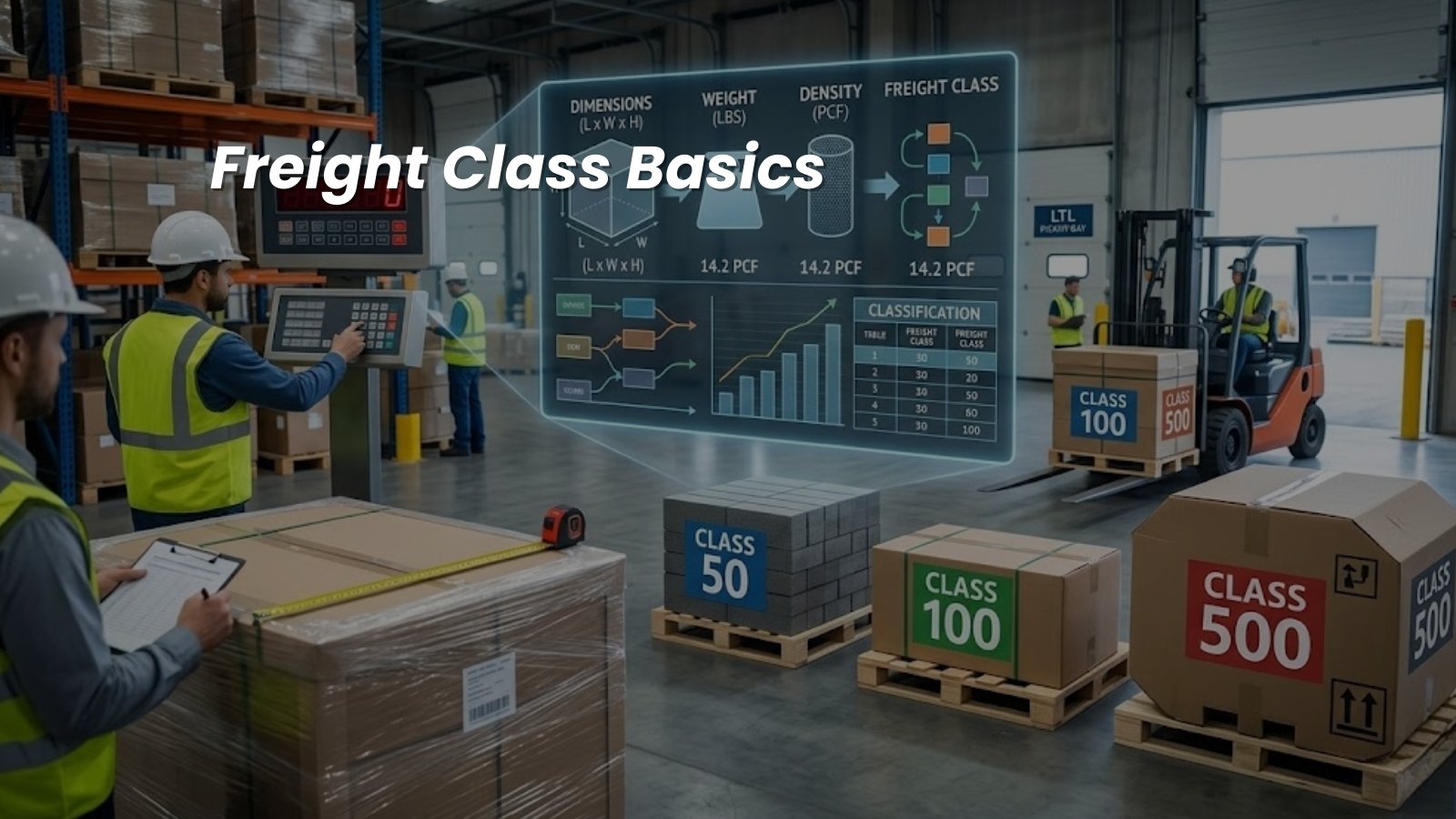
Freight class is one of the most misunderstood aspects of Less Than Truckload (LTL) shipping. Many unexpected charges in LTL arise from incorrect freight classification. Understanding how freight class works helps businesses avoid reclassification fees and pricing surprises.
Freight class is a standardized system used in North America to categorize commodities for LTL pricing. It is governed by the National Motor Freight Classification (NMFC) system. Each product type is assigned a class number ranging from 50 to 500. Lower class numbers generally represent dense, easy-to-handle goods, while higher classes apply to lighter, bulkier, or more fragile items.
Four main factors determine freight class: density, stowability, handling, and liability.
Density refers to how much space a shipment occupies relative to its weight. Dense items such as metal components usually receive lower freight classes. Lightweight but bulky goods, such as assembled furniture or plastic products, often receive higher classes.
Stowability considers how easily freight can be stored and transported with other shipments. Hazardous materials or unusually shaped items may have limited stowability, increasing class.
Handling evaluates how easily cargo can be moved. Fragile, irregular, or difficult-to-secure items may fall into higher classes due to additional care requirements.
Liability reflects the risk of damage or theft and the value of the commodity. High-value goods may carry higher classification considerations.
Incorrect freight class declarations can lead to reclassification charges. When carriers inspect shipments and find discrepancies in weight, dimensions, or commodity type, they adjust the class and billing accordingly. This process can also slow transit if freight must be reweighed or remeasured.
To determine accurate freight class, shippers should measure pallet dimensions carefully, weigh shipments precisely, and confirm the correct NMFC code for the product being shipped. Providing accurate information during booking prevents billing adjustments and supports smoother transit.
Freight class may seem technical, but it directly affects LTL pricing and handling. Clear understanding and accurate reporting reduce risk and improve cost predictability.
Frequently Asked Questions
What is freight class?
It is a standardized system used to determine LTL shipping rates.
What factors determine freight class?
Density, stowability, handling, and liability.
Why do reclassification charges happen?
When actual shipment details differ from declared information.
Is freight class used in FTL?
No. It primarily applies to LTL shipments.
How can businesses avoid freight class errors?
By measuring accurately and confirming the correct commodity classification before booking.