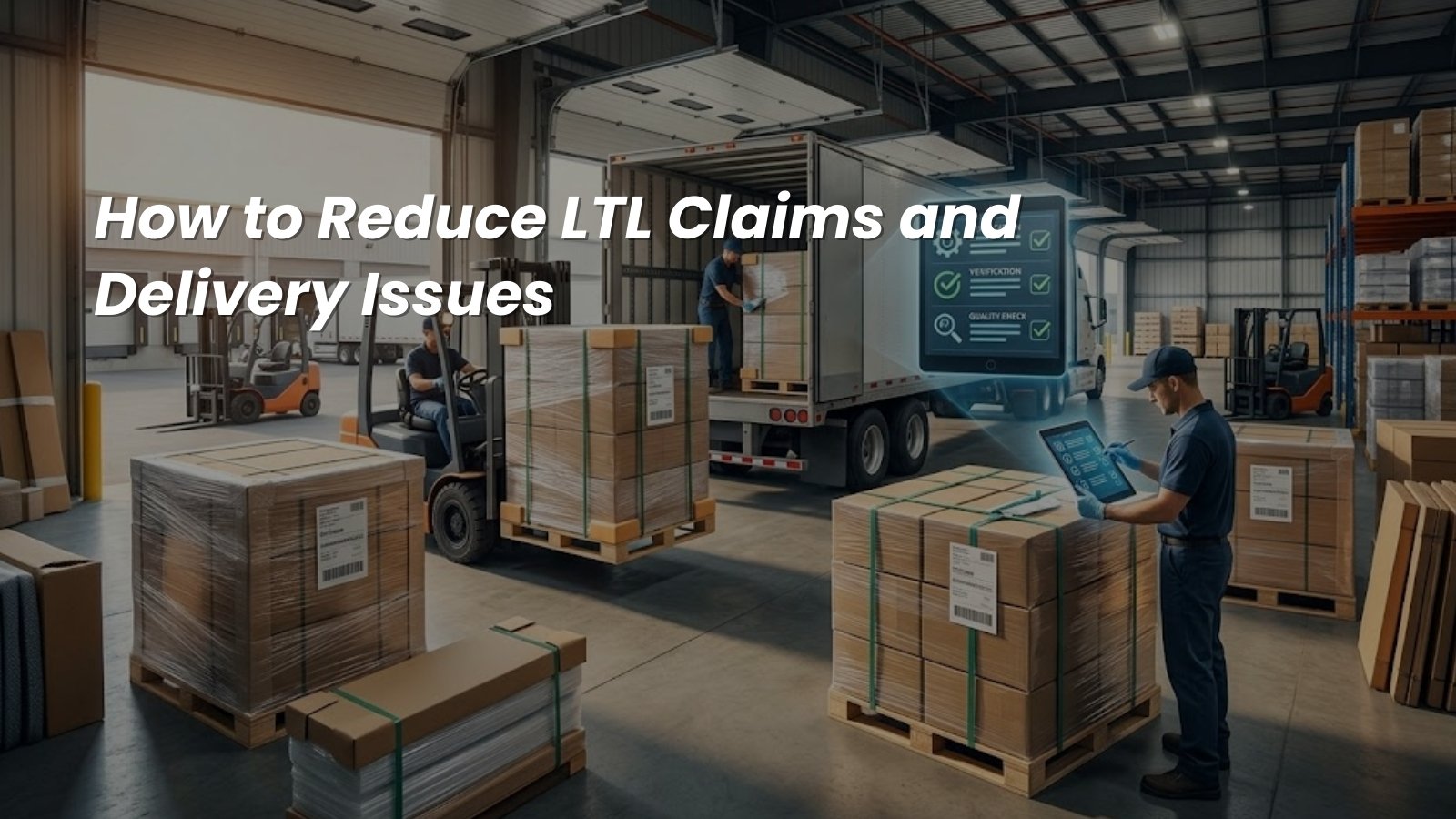
Less Than Truckload (LTL) shipping is cost-efficient for mid-sized shipments, but because freight moves through shared networks and multiple handling points, claim risk and delivery issues can occur if preparation is weak. Reducing LTL claims starts long before the truck arrives at pickup.
The most common cause of LTL claims is inadequate packaging. Since freight is transferred between terminals and may be stacked with other shipments, proper palletization is critical. Goods should be secured tightly to a sturdy pallet, shrink-wrapped from base to top, and reinforced with corner boards where necessary. Internal cushioning inside cartons helps absorb vibration during transit.
Accurate labeling is equally important. Each pallet should clearly display shipping labels on multiple sides. Mislabeled freight can be misrouted within terminal networks, leading to delivery delays. Clear consignee details reduce sorting errors.
Another common issue arises from incorrect shipment details. Weight, dimensions, and freight class must be declared accurately. Reweighs or reclassifications not only result in additional charges but can slow shipment movement if freight must be inspected mid-route.
Pickup preparation plays a role in smooth delivery. Ensuring freight is ready at the scheduled time prevents rescheduling delays. Clear access for trucks and available loading equipment reduce detention and missed pickups.
Communication between shipper and consignee also reduces delivery problems. Confirming delivery hours, dock availability, and contact details helps avoid failed delivery attempts. Missed appointments may result in redelivery charges and extended transit time.
Insurance coverage should be reviewed for higher-value goods. Standard carrier liability may not fully cover certain commodities. Understanding coverage limits allows businesses to evaluate additional protection if necessary.
Documentation retention is essential in case claims arise. Photographs of properly packaged freight before pickup provide useful evidence if damage occurs during transit. Clear records support faster claim resolution.
LTL shipping remains a practical solution for many businesses, but proactive preparation significantly reduces the likelihood of claims and service disruptions. Proper packaging, accurate data, and clear communication are the most effective safeguards.
Frequently Asked Questions
Why are LTL shipments more prone to claims than FTL?
Because LTL freight moves through multiple handling points and terminal transfers.
How can packaging reduce claim risk?
By stabilizing cargo on strong pallets and using internal cushioning.
Do incorrect dimensions affect delivery?
Yes. Reclassification or inspection may delay transit.
Is insurance necessary for LTL shipments?
It depends on cargo value and risk tolerance.
What is the best way to prevent delivery issues?
Accurate booking information and coordination with the delivery location.