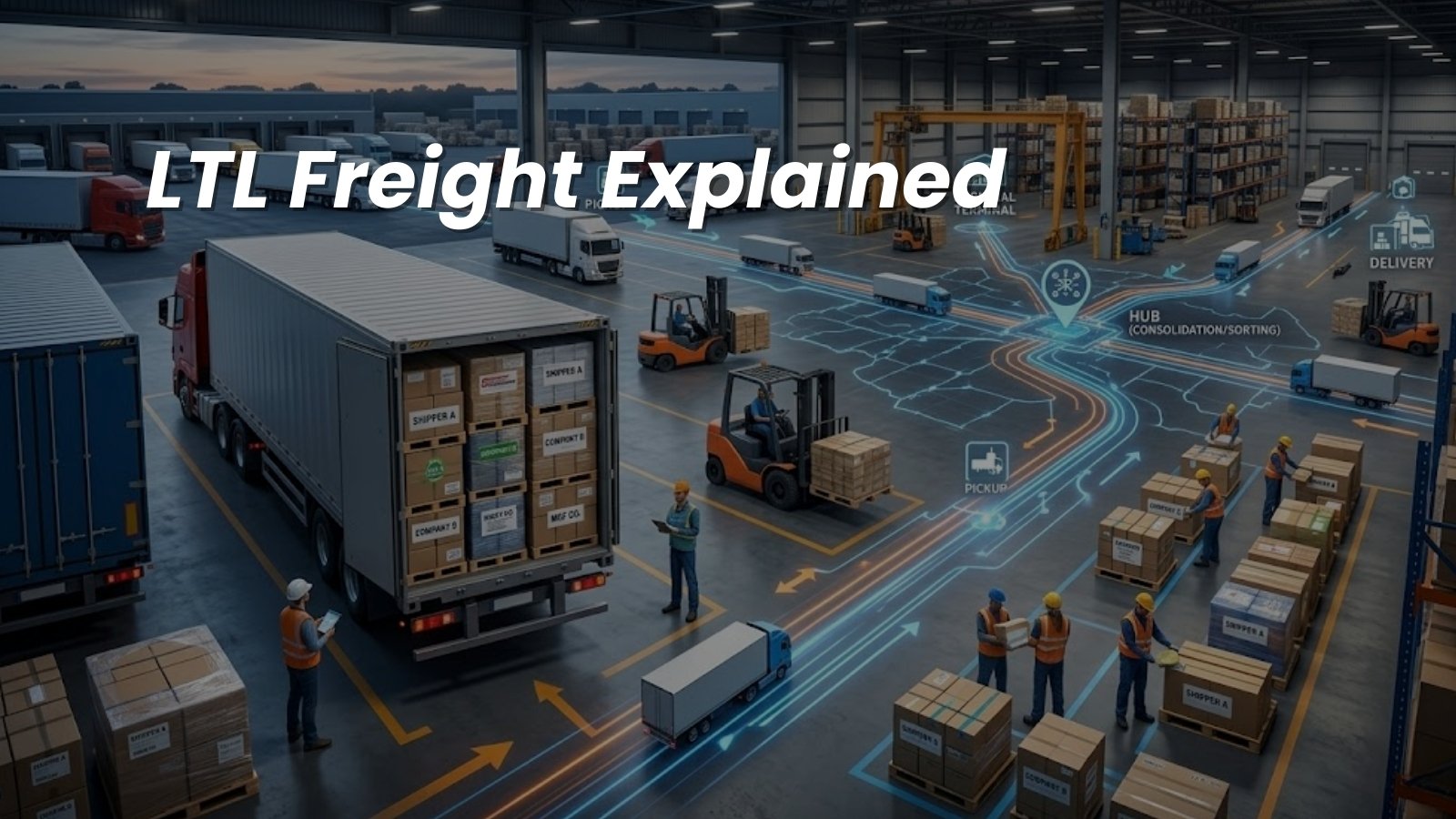
Less Than Truckload (LTL) freight is a ground shipping method where multiple shipments from different businesses share space in one trailer. Instead of reserving the entire truck, each shipper pays only for the portion of space their cargo occupies. This makes LTL a cost-effective option for smaller shipments that do not require a full trailer.
In practice, LTL operates through a hub-and-spoke network. A shipment is picked up from the origin facility and transported to a regional terminal. At the terminal, it is sorted and consolidated with other freight heading in a similar direction. The shipment may pass through multiple terminals before reaching its final delivery location.
Because LTL freight moves through shared networks, transit time can vary depending on distance, routing efficiency, and terminal schedules. While not as direct as Full Truckload (FTL), LTL remains a reliable solution for routine shipments where flexibility in delivery time is acceptable.
Pricing in LTL freight is typically determined by weight, dimensions, freight classification, and distance. Freight class reflects characteristics such as density, handling difficulty, and liability risk. Accurate measurements are essential to avoid reclassification charges after pickup.
LTL works well for manufacturers, distributors, and retailers who ship smaller quantities regularly. It allows businesses to manage inventory flow without waiting to accumulate enough goods for a full truckload.
However, because LTL shipments pass through multiple handling points, proper packaging is critical. Freight is loaded and unloaded several times during transit, which increases exposure to movement and potential damage if not secured correctly.
Scheduling also plays a role. Pickup and delivery windows are often flexible within a defined range, and accessorial services such as liftgate assistance or inside delivery may influence cost and timing.
Overall, LTL freight provides an efficient balance between cost and flexibility. It supports consistent shipping schedules for mid-sized loads while optimizing transportation resources across shared networks.
Frequently Asked Questions
What does LTL stand for?
LTL stands for Less Than Truckload, meaning multiple shipments share one trailer.
Is LTL cheaper than FTL?
For smaller shipments, yes, because you only pay for the space used.
Why does LTL take longer than FTL?
Because shipments move through terminal networks and may transfer between trailers.
How is LTL pricing calculated?
Pricing is based on weight, dimensions, freight class, and distance.
When should businesses choose LTL?
When shipment volume is too small for a full truckload but still requires reliable transport.