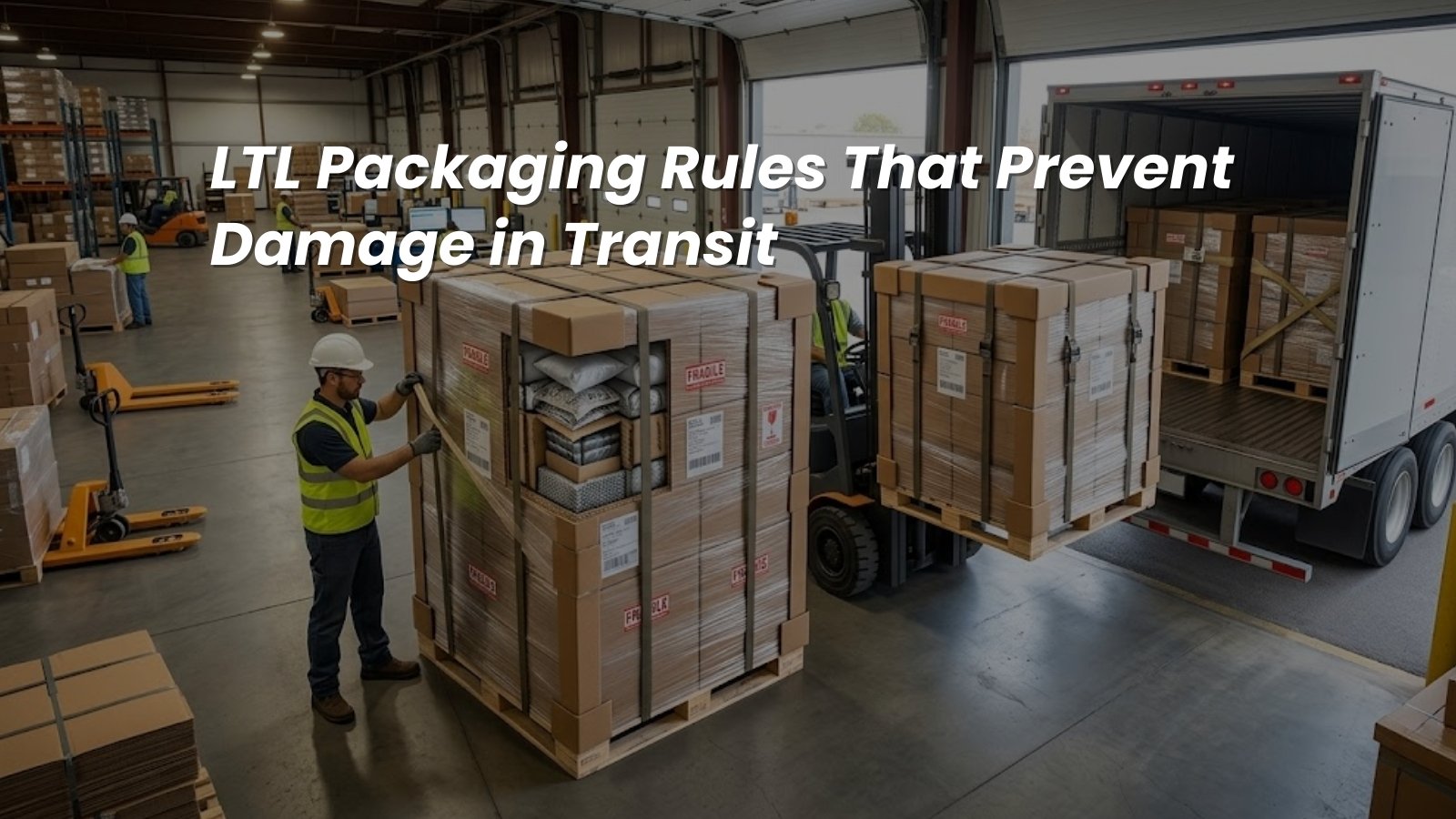
Less Than Truckload (LTL) freight involves multiple shipments sharing space in a single trailer. Because cargo moves through terminal networks and may be transferred between trucks, proper packaging is critical. Unlike Full Truckload (FTL), where goods remain in one trailer from pickup to delivery, LTL shipments are handled multiple times. This increases exposure to movement, stacking, and shifting during transit.
One of the most important packaging principles in LTL freight is palletization. Freight should be secured on sturdy pallets that can support the full weight of the shipment. Pallets must be in good condition, without broken boards or weak supports, to prevent collapse during lifting or stacking.
Shrink wrapping or banding cargo to the pallet is equally important. This stabilizes the load and prevents cartons from separating during handling. Stretch wrap should be tightly applied from the base upward, securing the cargo firmly to the pallet structure.
Weight distribution plays a key role in preventing damage. Heavier items should be placed at the bottom, with lighter cartons stacked above. Uneven weight distribution increases the risk of tipping or shifting during transport.
Proper labeling reduces handling errors. Each pallet should display clear shipping labels on multiple sides, including consignee details and tracking numbers. Fragile or special-handling instructions must be visible and easy to identify.
Using corner protectors and edge boards adds structural support to stacked cartons. These reinforcements help maintain load integrity during terminal transfers and reduce compression damage when freight is stacked with other shipments.
For fragile goods, internal cushioning is essential. Bubble wrap, foam inserts, or protective padding inside cartons absorb vibration and impact forces that occur during transit.
Dimensions and weight must be declared accurately at booking. Incorrect measurements can result in reclassification, additional charges, or improper handling if carriers are not aware of the shipment’s true characteristics.
LTL packaging is not only about protecting the product; it also ensures smooth movement through carrier networks. Well-packaged freight reduces claim risk, prevents delays, and supports efficient loading and unloading at terminals.
Frequently Asked Questions
Why is packaging more important in LTL than FTL?
Because LTL shipments pass through multiple handling points and may be transferred between trucks.
What type of pallet should be used?
Strong, undamaged pallets that can support the shipment’s full weight.
How can damage risk be reduced?
By stabilizing cargo with shrink wrap, proper stacking, and internal cushioning.
Do incorrect dimensions affect shipment handling?
Yes. Misdeclared dimensions can lead to reclassification and improper handling.
Are fragile labels enough to prevent damage?
No. Proper internal packaging and load stabilization are equally important.