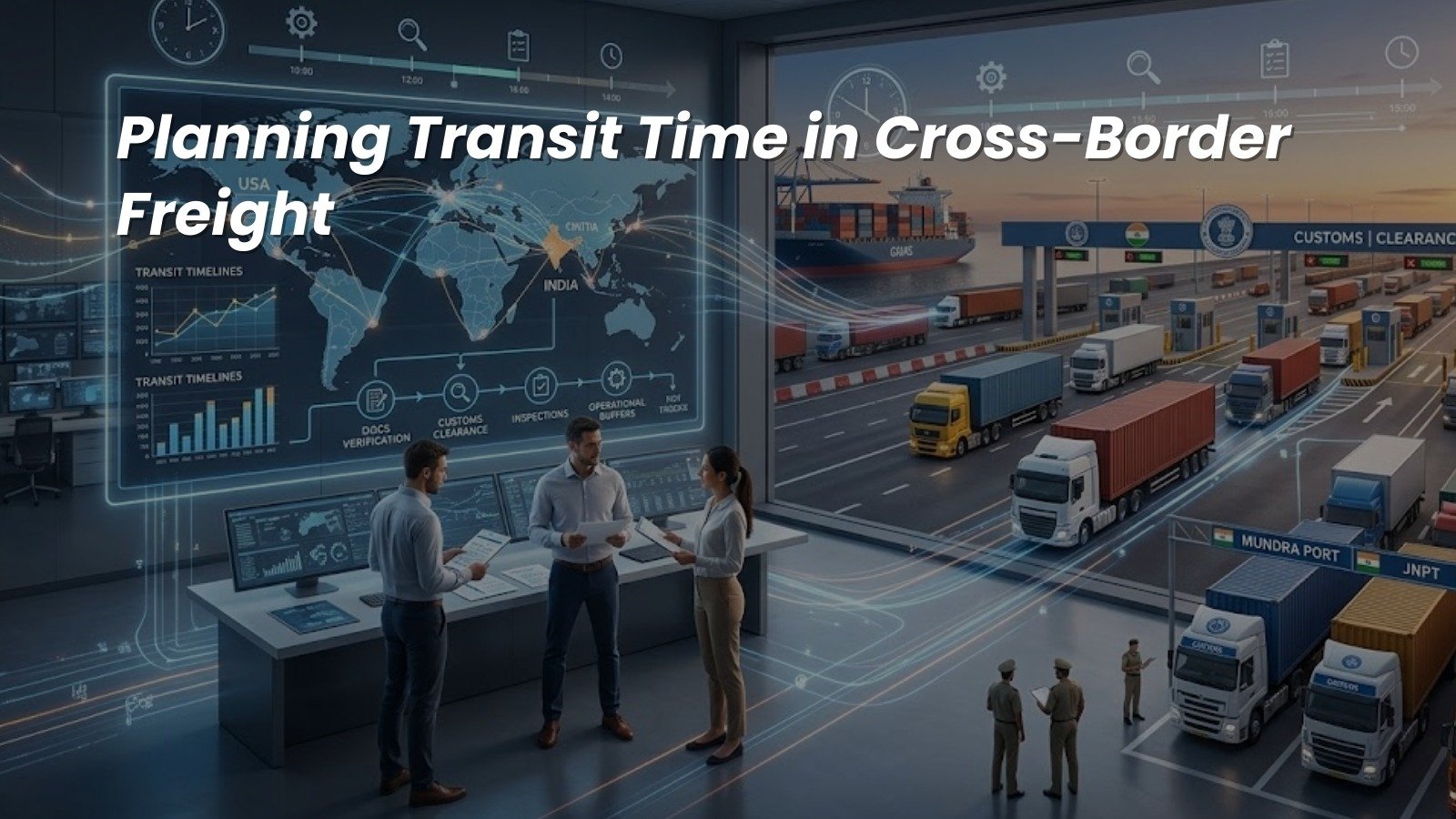
Transit time in cross-border freight is often misunderstood. Many businesses look at distance and assume delivery duration can be calculated the same way as domestic trucking. In reality, cross-border transit involves regulatory checkpoints, documentation validation, inspections, capacity constraints, and operational handoffs that extend beyond pure driving time.
Accurate transit planning requires more than mileage estimates. It requires understanding how borders operate, how documentation flows, and how external variables affect clearance and movement.
What Transit Time Really Includes
Cross-border transit time typically includes several stages:
• Pickup and origin preparation
• Export documentation review
• Border pre-filing and clearance
• Physical border crossing
• Potential inspections
• Final delivery scheduling
Driving time is only one portion of the total journey. Delays frequently occur before the vehicle even reaches the border.
Pre-Clearance and Digital Filing
Many countries require electronic pre-filing of shipment data before arrival at the border. When documentation is submitted early and accurately, clearance can be streamlined. When filings are incomplete or inconsistent, authorities may flag the shipment before it arrives.
Transit planning should include buffer time for document verification and potential corrections. Rushing departure without verifying digital clearance status increases risk.
Border Congestion and Volume Fluctuation
Cross-border corridors experience volume spikes driven by seasonality, trade cycles, and economic events. For example, agricultural export seasons or holiday retail cycles can significantly increase border traffic.
Congestion is not always predictable, but reviewing historical trends and working with experienced freight planners can improve timeline accuracy.
Inspection Probability
Risk-based inspection systems evaluate shipments using importer history, product category, and documentation accuracy. Even compliant shipments may occasionally be selected for inspection.
Inspection timelines vary. Some inspections require document review only, while others involve physical cargo examination. Transit planning should assume that a small percentage of shipments may experience additional review.
Regulated Cargo and Transit Variability
Certain goods face additional compliance layers. Pharmaceuticals, food products, chemicals, and controlled technology often require specific certifications or regulatory checks.
Transit planning for regulated goods should account for potential review by specialized agencies in addition to customs authorities.
Driver Hours and Cross-Border Rules
Road freight between countries must comply with driver hour regulations that vary by jurisdiction. Border waiting times can affect driver schedules, especially if clearance is delayed.
Planning must consider whether driver swaps or team drivers are required to maintain delivery timelines.
Weather and Infrastructure
Cross-border routes may involve mountainous terrain, seasonal weather disruptions, or infrastructure bottlenecks. Severe weather can close border crossings or reduce operating capacity.
Transit models should incorporate seasonal weather risk for certain corridors.
Multimodal Considerations
Some cross-border shipments combine road, rail, or short-sea transport. Each modal handoff introduces potential variability.
Transit planning must align schedules across modes to prevent missed connections.
Buffer Strategy: Building Realistic Time Margins
Effective cross-border freight planning includes structured buffers. These buffers should not be arbitrary but based on:
• Trade lane complexity
• Product category
• Historical inspection frequency
• Seasonal demand
• Infrastructure conditions
Adding a structured buffer of one to two days for routine shipments can prevent cascading delays in downstream operations.
Communication and Expectation Management
Clear communication with customers or internal stakeholders reduces friction when transit variability occurs. Providing a realistic delivery window instead of a single guaranteed date improves credibility.
Many experienced shippers provide delivery ranges that reflect best-case and standard-case outcomes.
Technology and Visibility
Modern tracking systems allow real-time monitoring of shipment progress. However, tracking visibility does not eliminate border uncertainty. It only improves response time when issues arise.
Proactive alerts about document status, inspection flags, or congestion updates can help adjust delivery plans quickly.
Common Planning Mistakes
Several recurring planning errors affect cross-border freight timelines:
• Assuming domestic transit logic applies
• Ignoring documentation review time
• Underestimating inspection probability
• Failing to account for peak season capacity
• Scheduling downstream production too tightly
Recognizing these patterns helps reduce avoidable stress.
Case Example: Manufacturing Supply Chain
A manufacturer shipping components across a border daily may assume stable transit times based on historical averages. However, a sudden regulatory update requiring additional documentation can disrupt schedules.
In such cases, having pre-established buffer inventory or alternative routing options protects production continuity.
Case Example: Retail Distribution
Retail importers moving seasonal goods across borders must account for high-volume inspection risk during peak seasons. Early shipping combined with buffer storage reduces the risk of missed retail launch windows.
Balancing Speed and Reliability
Fastest possible transit is not always the most reliable strategy. Consistent, predictable transit supported by compliance accuracy often produces better long-term performance.
Cross-border freight planning works best when businesses prioritize realistic scheduling over aggressive estimates.
Frequently Asked Questions
How long does cross-border freight usually take?
Transit time varies by route, documentation accuracy, and inspection risk. Distance alone does not determine delivery duration.
Why do some shipments clear quickly while others are delayed?
Clearance depends on documentation accuracy, importer history, product category, and inspection selection.
Can transit time be guaranteed?
Absolute guarantees are difficult due to regulatory variables. Planning with buffers improves reliability.
Does pre-clearance eliminate border waiting time?
Pre-clearance reduces risk but does not remove the possibility of inspection.
How can businesses improve transit predictability?
By standardizing documentation, monitoring seasonal trends, and maintaining clear communication with brokers and carriers.