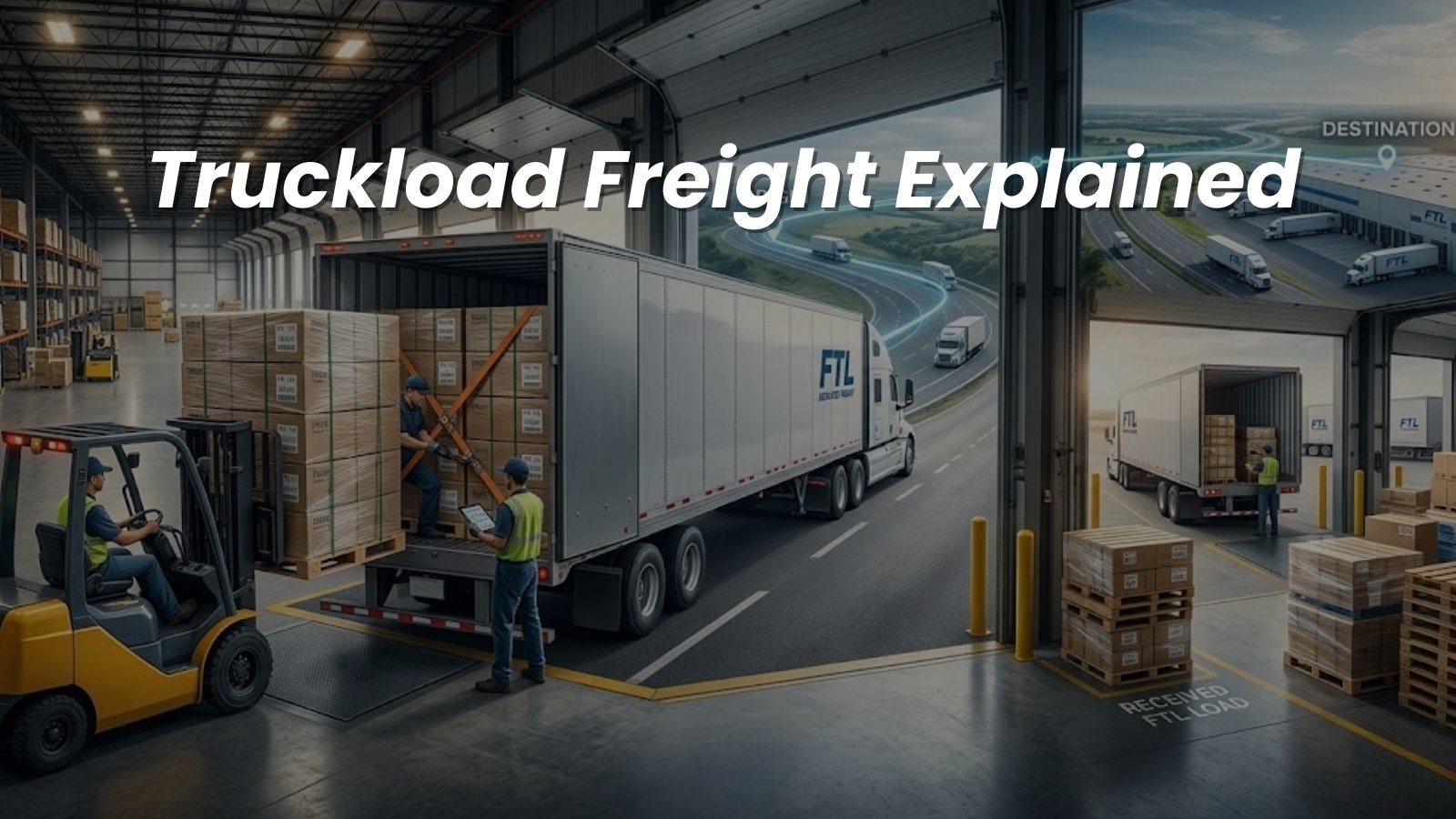
Truckload freight, commonly referred to as FTL (Full Truckload), is a ground shipping method where one shipment occupies the entire trailer. Unlike shared freight models, FTL moves directly from pickup to delivery without combining cargo from multiple shippers. This structure reduces handling, limits transit stops, and offers greater control over timing.
In practical terms, FTL begins when a shipper schedules a dedicated trailer for pickup. The trailer arrives at the origin facility, goods are loaded and secured, and the truck departs directly toward the destination. Because the shipment is not transferred between terminals, transit time is typically more predictable than shared freight options.
FTL is commonly used when shipments are large enough to fill most of a trailer, when goods are sensitive to handling, or when delivery schedules are tight. Manufacturers often rely on FTL to move raw materials between plants or transport finished goods to distribution centers. Retailers may use truckload shipping to replenish inventory in bulk.
Cost in truckload freight is influenced by distance, fuel rates, equipment type, and market demand. Unlike LTL freight, pricing is generally based on the full trailer rather than freight class calculations. While FTL may appear more expensive for smaller shipments, it can become cost-effective when load size approaches trailer capacity.
One of the main advantages of FTL is reduced risk of damage. Since the cargo remains in one trailer throughout transit, there are fewer handling points. This is especially important for fragile goods, high-value equipment, or shipments that must remain sealed until delivery.
Transit reliability is another benefit. FTL shipments travel directly to their destination without terminal transfers, which reduces the likelihood of delays caused by sorting or reloading.
However, truckload freight requires careful scheduling. Drivers are subject to regulated hours of service, and appointment windows at warehouses must be coordinated precisely. During peak seasons, securing capacity can become more challenging, making early planning essential.
Overall, FTL works best when shipment volume, delivery urgency, or handling sensitivity justify the use of a dedicated trailer. It provides consistency and control, making it a preferred option for many commercial supply chains.
Frequently Asked Questions
What does FTL stand for?
FTL stands for Full Truckload, meaning the shipment occupies the entire trailer.
Is truckload freight faster than LTL?
Often yes, because it moves directly without terminal transfers.
When should businesses choose FTL?
When shipment volume is large, delivery is time-sensitive, or goods require minimal handling.
Does FTL reduce damage risk?
Yes, because cargo remains in one trailer throughout transit.
How is FTL priced?
Pricing is typically based on distance, equipment type, and market conditions rather than freight class.