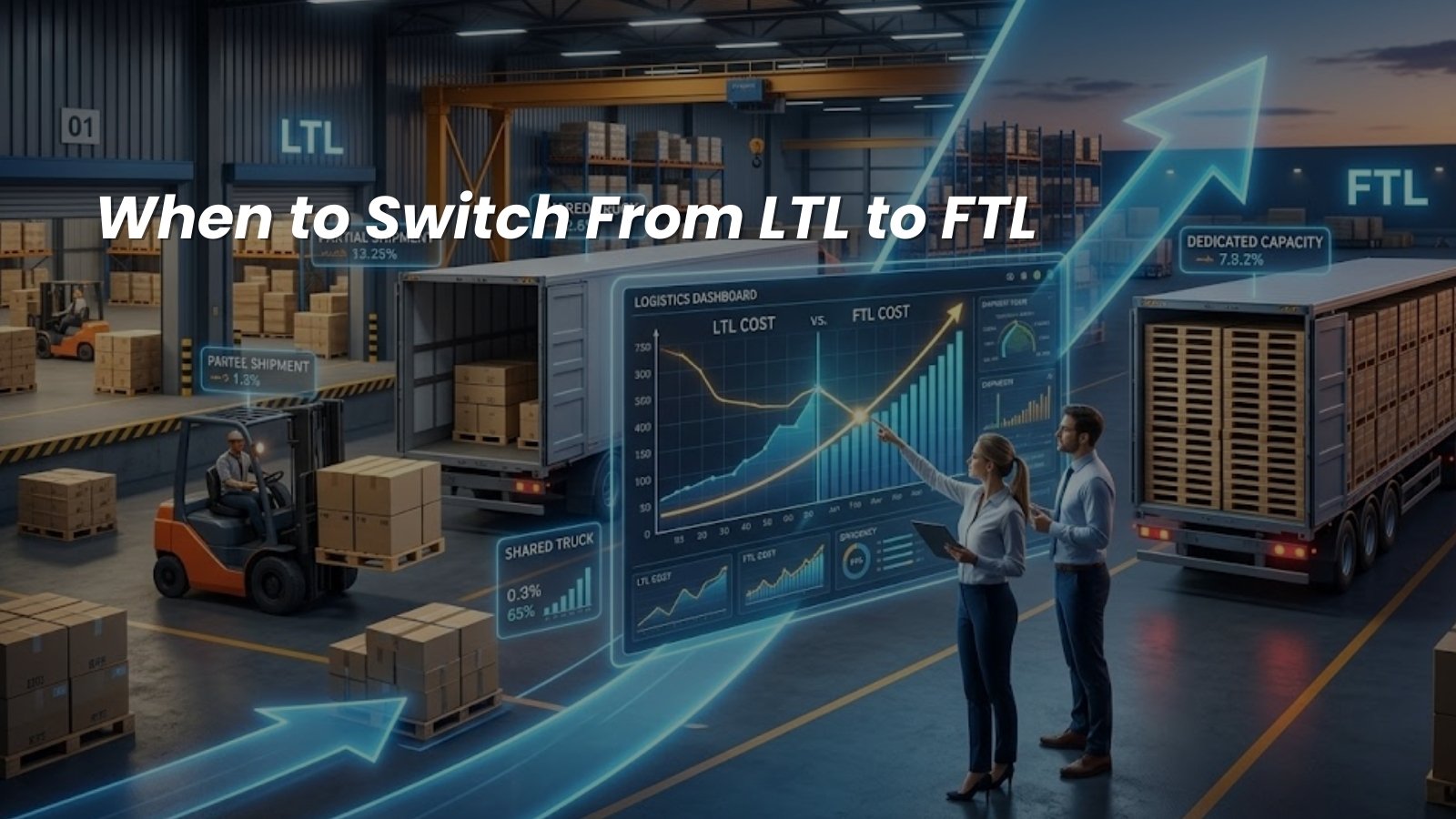
As businesses grow, their shipping patterns evolve. What once worked efficiently under a Less Than Truckload (LTL) model may eventually justify a transition to Full Truckload (FTL). Recognizing when to switch from LTL to FTL helps control costs, improve transit reliability, and reduce operational complexity.
One of the clearest signs is increasing shipment volume. If regular shipments begin occupying a significant portion of a trailer, paying for shared space may no longer be economical. At a certain threshold, the cost difference between LTL and FTL narrows, while FTL provides faster and more predictable transit.
Frequent delivery delays may also signal the need for change. Because LTL freight moves through terminal networks, additional handling stages can extend transit windows. Businesses operating on tighter production or retail replenishment schedules often benefit from the direct routing offered by FTL.
Damage frequency is another indicator. If recurring LTL shipments involve fragile goods or high-value products, the multiple handling points within shared networks may increase exposure to risk. FTL minimizes touchpoints by keeping freight in one trailer from pickup to delivery.
Operational efficiency plays a role as well. Managing multiple LTL shipments to the same destination over short periods can create administrative complexity. Consolidating these into fewer FTL shipments may streamline scheduling and reduce documentation workload.
Cost comparison should include hidden factors. LTL shipments may incur accessorial charges for liftgates, appointments, or reclassification. When these fees accumulate across multiple shipments, FTL may become more cost-effective overall.
Consistency in shipping lanes supports transition decisions. Businesses with regular, repeat routes often benefit from negotiating dedicated FTL capacity, which enhances predictability and strengthens scheduling control.
Switching to FTL does not mean eliminating LTL entirely. Many companies use a hybrid approach, reserving FTL for larger or time-sensitive shipments while retaining LTL for smaller or less urgent loads.
Evaluating shipment size trends, damage rates, transit requirements, and cost patterns helps determine when the shift makes operational sense. The right timing ensures transportation strategy keeps pace with business growth.
Frequently Asked Questions
At what point does FTL become cheaper than LTL?
When shipment volume approaches trailer capacity or frequent LTL shipments add up in cost.
Is FTL always faster than LTL?
Typically yes, because it avoids terminal transfers.
Should businesses completely replace LTL?
Not necessarily. Many use a mix of both depending on shipment size.
Does FTL reduce handling risk?
Yes. Freight remains in one trailer throughout transit.
How do I know it’s time to switch?
Review shipment volume, recurring costs, and delivery performance trends.