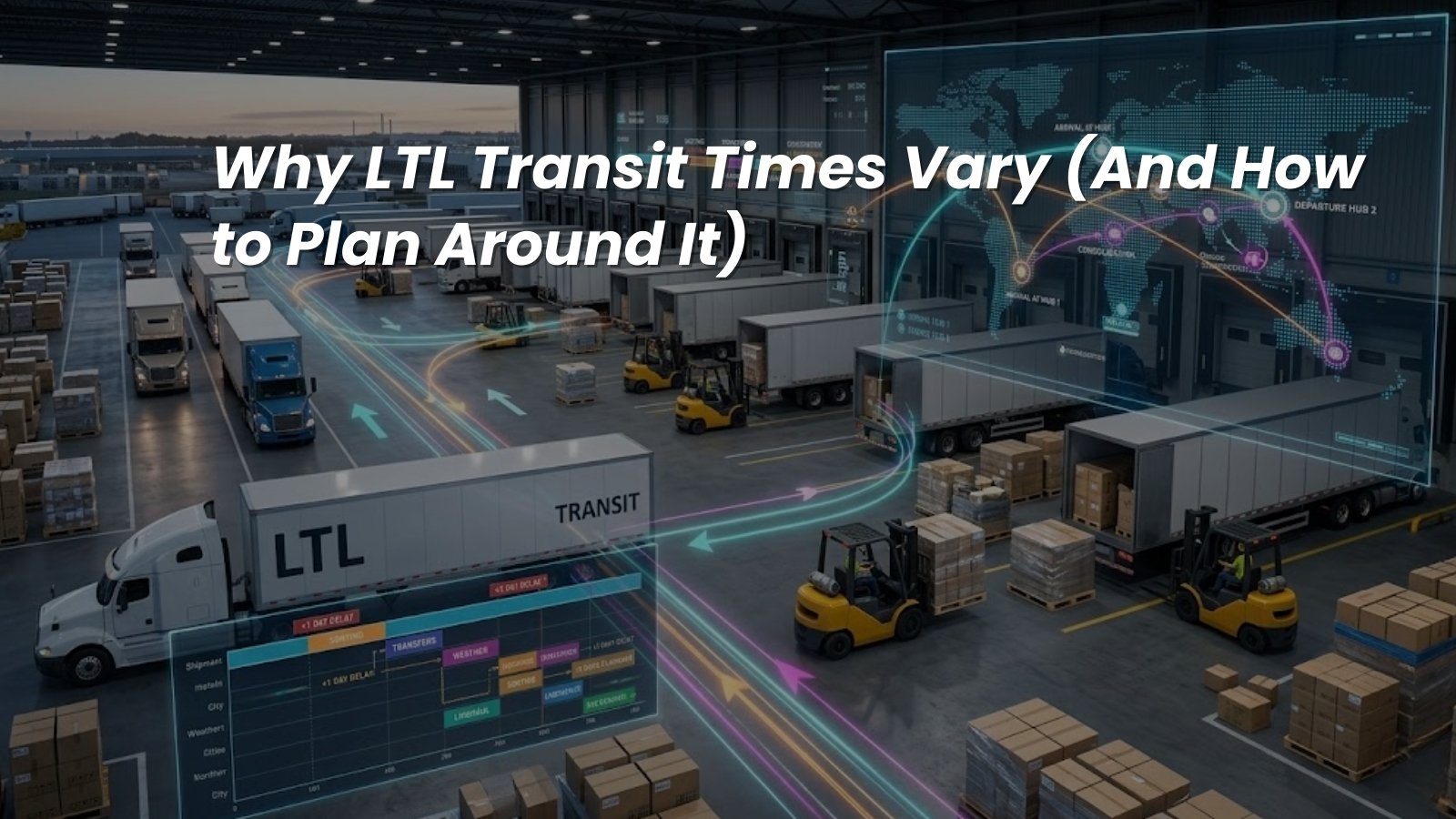
Less Than Truckload (LTL) freight operates through a shared carrier network. Unlike Full Truckload (FTL), where cargo moves directly from pickup to delivery, LTL shipments pass through multiple terminals before reaching their destination. This network structure explains why transit times can vary from shipment to shipment.
The first factor influencing LTL transit time is routing. After pickup, freight is transported to a local terminal where it is sorted and consolidated with other shipments heading in similar directions. From there, it may move to regional hubs before final delivery. Each transfer point adds handling time.
Distance also affects variability. While carriers provide estimated transit ranges based on origin and destination zip codes, actual delivery can shift depending on route density and trailer capacity. High-volume lanes often move more efficiently than less frequent routes.
Terminal congestion can influence timing as well. During peak shipping seasons or regional demand surges, freight volumes increase. Sorting operations at terminals may require additional time, which impacts delivery windows.
Weather and road conditions play a role. Severe weather events, road closures, or traffic disruptions can extend transit schedules. While carriers attempt to adjust routes accordingly, external factors remain unpredictable.
Another common cause of delay is reclassification or documentation issues. If shipment dimensions or freight class are declared incorrectly, freight may be pulled aside for verification, which can slow movement through the network.
Appointment scheduling requirements at delivery locations also impact timing. If a consignee requires a specific delivery window, freight may be held until the appointment slot is available.
To plan effectively around LTL variability, businesses should build buffer time into their delivery schedules. Clear communication of pickup details, accurate shipment measurements, and confirmation of delivery requirements reduce avoidable delays.
Using consistent carriers for recurring lanes can also improve predictability. Over time, performance patterns become easier to anticipate, allowing better planning.
LTL remains a cost-efficient solution for mid-sized shipments, but understanding how its network operates helps set realistic expectations and improve supply chain coordination.
Frequently Asked Questions
Why does LTL take longer than FTL?
Because shipments move through terminal networks and may transfer between trucks.
Can transit times be guaranteed in LTL?
Guaranteed services exist but may involve additional cost.
Does peak season affect LTL delivery?
Yes. Higher freight volumes can extend transit windows.
How can delays be reduced?
Accurate documentation and flexible scheduling improve reliability.
Is LTL suitable for time-critical shipments?
It can be, but FTL or expedited services may offer greater predictability.